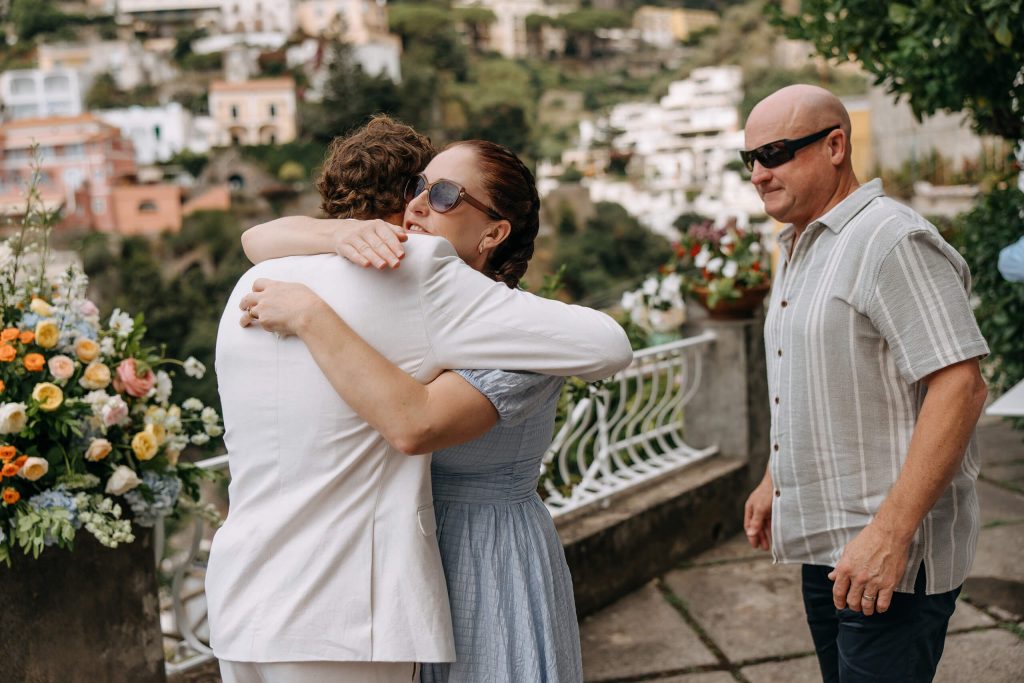
“Hybrid film and digital” is everywhere in Italian wedding photography, and the questions that matter are what it changes in your day, your timeline and your wait for the gallery.
In short: a hybrid film and digital wedding photographer in Italy shoots part of your day on film, usually portraits, details and quiet moments, and keeps digital for fast, dark or unrepeatable moments, then delivers one cohesive gallery. Our standard photography prices apply, by hours: €1,390 for 5 hours, €1,590 for 6, €1,790 for 7, €1,990 for 8 and €2,190 for a full day, with no extra travel fees. Film must be developed and scanned, so ask us for the turnaround for your date. Every option is priced on our investment page.
Will film make your photographs more editorial? Does it slow the day down? What happens if film is lost in the mail, and how long will you wait for the gallery if part of it is analogue?
This guide is for couples who love a tactile, classic look without turning the wedding into a photoshoot or adding stress to a destination timeline. It covers the hybrid look, workflow, turnaround and archiving. For the styling and venues that create a couture look, see our guide to the film and digital wedding photographer in Italy.
We are a team of six documentary wedding photographers and filmmakers, and we travel across Europe for couples who marry abroad. Italy is one of those places where light, architecture, and atmosphere reward a thoughtful hybrid approach—when it’s done with intention.
What “hybrid film + digital” actually means (and what it doesn’t)
Hybrid coverage means we photograph your wedding using both digital cameras and film cameras, choosing the tool that best fits the moment, the light, and the pace of the day.
What it is
- Digital for fast-moving moments, low light, and anything where timing is razor-thin (think: entrances, hugs, dancing, quick weather changes).
- Film for a slower, more deliberate feel—often portraits, details, and scenes where the light is beautiful and we can breathe for a second.
- A consistent final gallery where film and digital are edited to feel cohesive.
What it isn’t
- It’s not “all film.” (That’s a different service style and it comes with different risks and limitations.)
- It’s not a filter you slap on everything. Film has its own physics—light, latitude, grain, and color response.
- It’s not slower coverage. A good hybrid workflow is designed to be invisible to you and your guests.
hybrid is about using film where it shines, and digital where it protects the story.
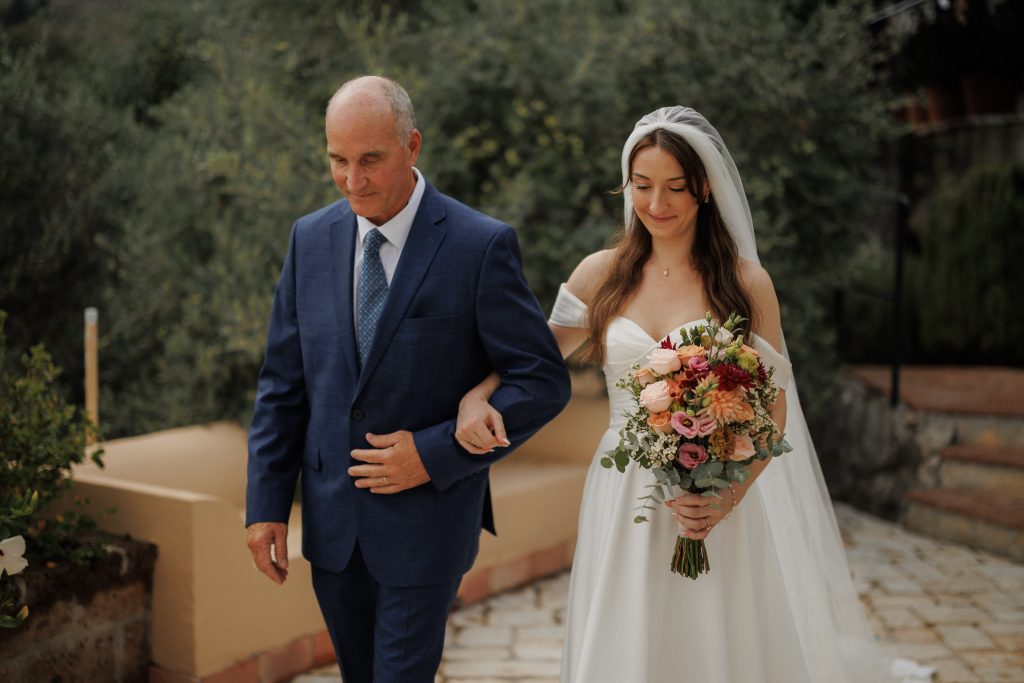 Nik & Ashley · Sicily · see the full wedding →
Why hybrid makes sense in Italy: light, texture and pace
Italy gives you a mix that’s hard to replicate anywhere else: warm stone, layered history, reflective water, olive groves, dramatic coastlines, and interiors that range from candlelit palazzos to bright modern villas.
Film loves texture (linen, stone, plaster walls), sun-kissed color (terracotta, lemon, sea tones), and natural light that wraps gently—especially in the morning and late afternoon.
Digital excels when Italy gets unpredictable: sudden summer storms in Tuscany, wind on the Amalfi Coast, harsh midday sun in Puglia, or dim churches where flash isn’t allowed.
Italy is visually rich—hybrid lets you keep the romance and the reliability.
The hybrid look: what you can expect from film and digital
Couples usually choose hybrid because they want images that feel alive and tactile, less perfectly crisp and more emotional, while still getting full documentary coverage.
What film tends to add
- Soft highlight roll-off: bright areas (sun on a veil, white walls, reflections on Lake Como) feel smoother and less harsh.
- Organic grain: a texture that reads as classic rather than “noisy.”
- Color depth: especially in skin tones and warm neutrals (stone, wood, linen).
- A slower, intentional feeling: film frames often feel like little still memories.
What digital tends to add
- Speed and flexibility: fast sequences, quick reactions, and changing light.
- Low-light strength: receptions, dancing, candlelit dinners, and night portraits.
- Consistency across tricky conditions: mixed indoor lighting, shade/sun transitions, and tight timelines.
How a cohesive gallery is created
The goal isn’t for you to look at a gallery and think, “Oh, that’s film, that’s digital.” The goal is a consistent story. That comes from:
- Choosing film moments intentionally (not randomly).
- Metering and exposure discipline on film.
- Editing digital to match the emotional tone of the film scans—without forcing fake grain or heavy presets.
Hybrid should feel like one story, not two different styles stitched together.
When we’ll typically shoot film during an Italy wedding day
Every wedding is different, but here’s a realistic idea of where film often fits best in Italy—especially for couples who want a documentary feel with a touch of editorial.
Film-friendly parts of the day
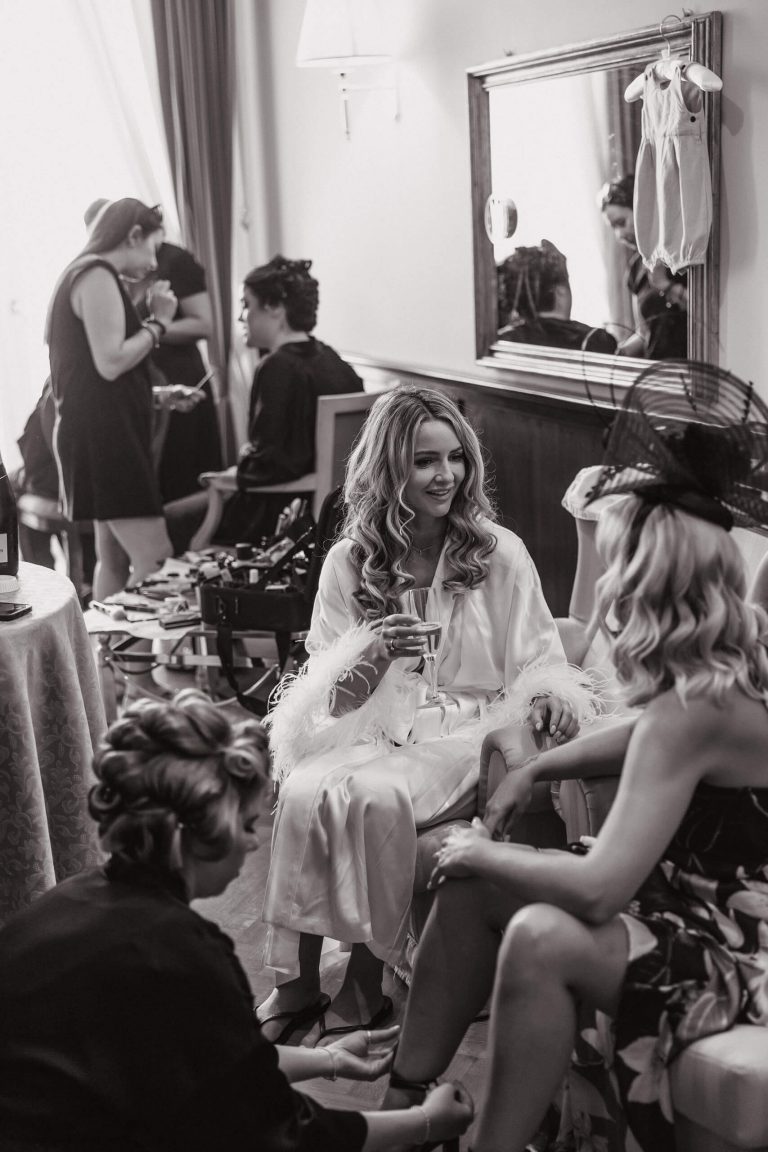
- Getting ready details in good window light (invitation suite, perfume, textures, dress hanging in shade).
- Quiet portraits (a few minutes of calm, especially pre-ceremony or during golden hour).
- Couple session in beautiful light: olive groves, villa gardens, lakeside promenades, coastal viewpoints.
- Tablescapes and florals before guests sit down—film loves candlelight and linen.
- Atmosphere frames: the piazza, the view, the architecture, the “where we are” context.
Digital-first parts of the day (for safety and speed)
- Ceremony (especially if it’s fast, emotional, or in mixed light).
- Family formals (efficient, consistent, and quick).
- Confetti/rice exits (one chance moments).
- First dance + party (low light, movement, unpredictable energy).
Film is a creative choice; digital is the safety net that protects the once-only moments.
Italy-specific light realities that affect film (and how we plan around them)
Italy is stunning, but it’s not always “easy light.” Hybrid works best when we plan for what the day will actually look like.
Midday sun in summer (especially in Tuscany, Rome, Puglia, Amalfi)
From late morning to mid-afternoon, the sun can be high and sharp. Film can handle bright scenes beautifully, but harsh overhead light can create deep eye shadows and blown highlights if we’re not careful.
- We’ll prioritize open shade (courtyards, loggias, shaded garden paths).
- We’ll schedule portraits for early or late when possible.
- We’ll keep you comfortable—heat affects energy, makeup, and how the day feels.
Stone interiors and churches
Many Italian venues have lovely interiors that are dim, warm and mixed-light. Film can look wonderful here, but it is less forgiving when the light is extremely low or flash is restricted.
- Digital often leads for ceremonies indoors.
- Film may come out for a few quiet frames when conditions allow.
Coastal wind (Amalfi, Cinque Terre, Sicily, Sardinia)
Wind changes everything: hair, veils, audio, and how long you want to stand on a viewpoint. Hybrid helps because we can move fast with digital and then slow down for a few film frames when the wind calms.
The best “film look” in Italy usually comes from smart timing, not forcing film in every situation.
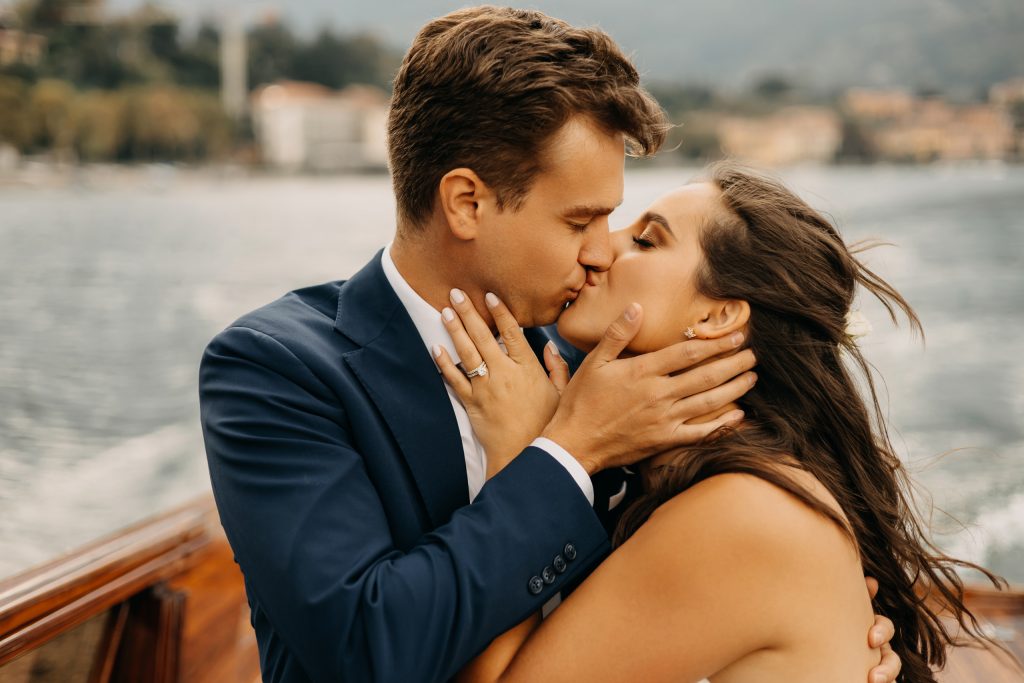 Kevin & Sara · Lake Como · see the full wedding →
Workflow: what happens to your film after the wedding
This is the part couples rarely see—but it’s where professionalism matters most.
Step-by-step: a responsible hybrid workflow
- Film is labeled and secured immediately after shooting (organized by day/part of day).
- Film is stored safely while traveling (protected from heat and rough handling).
- Film is sent to a professional lab for developing and high-quality scanning.
- Scans are backed up as soon as they’re received.
- Digital images are culled and edited to match the overall tone of the film.
- Final gallery is delivered as one cohesive story.
Why lab choice matters (especially for destination weddings)
Film isn’t “one button.” The lab influences color, density, and scan quality. A consistent lab relationship is part of how you get consistent results.
hybrid is not just shooting two formats. It is managing two pipelines with care.
Turnaround time: what to expect with hybrid coverage
Because film must be developed and scanned, hybrid galleries typically take a bit longer than all-digital coverage. The exact timing depends on the season, lab workload, and how much film was shot.
What can speed it up (or slow it down)
- Seasonality: peak wedding months can mean longer lab queues.
- Amount of film: more rolls = more scanning time.
- Travel logistics: destination weddings often involve travel days before film can be shipped safely.
How we keep you from waiting forever
- We build the workflow so digital editing can start while film is in the lab.
- We keep the final delivery consistent—so you don’t get a “half gallery” that feels unfinished.
Hybrid takes a little more patience, but it shouldn’t feel vague or chaotic.
Archiving: how your Italy wedding photographs stay safe long-term
A destination wedding happens once, and archiving is where beautiful work becomes protected. Here is what matters and what you can do on your side.
Digital files: backups and redundancy
A professional approach typically includes multiple copies in multiple places. In practice, that means:
- Redundant storage during and after the wedding (not just one hard drive).
- Separate backups for RAW files, final edited files, and film scans.
- A clear system so nothing is “floating around” unorganized.
Film: the physical negative is an archive
One of the underrated benefits of film is that the negative is a physical original. Scans can be re-scanned in the future if technology improves or if you want a different scan style.
What you should do after delivery (simple, non-technical)
- Download your full gallery and keep a copy on two separate drives.
- Keep one drive at home and one in a different location (or a secure cloud backup).
- Order prints or an album—physical products are a form of preservation.
The best archive is redundancy—more than one copy, more than one place.
How to decide if hybrid is right for your Italy wedding
Hybrid is not better for everyone. It suits couples who care about mood and want their wedding documented honestly, without over-directing every moment.
Hybrid is a great fit if you…
- Love a soft, classic, editorial feel without heavy trends.
- Value real moments and also want a few iconic portraits.
- Are planning a villa, countryside, lake, or coastal wedding with beautiful natural light.
- Want a photographer who can handle both calm portraits and fast documentary coverage.
You might prefer all-digital if you…
- Have a very late-night party focus and want maximum low-light coverage.
- Need the fastest possible delivery for a tight publication schedule.
- Are getting married in a very dark venue where film would be limited.
Choose hybrid for the feeling it creates, not because it is fashionable.
Planning tips: how to build a film-friendly Italy timeline (without losing the day)
The easiest way to get film you’ll love is not “more posing.” It’s a timeline that gives you small pockets of calm in great light.
A simple, film-friendly structure
- Morning: slow getting ready with window light and space to breathe.
- Pre-ceremony: 10–20 minutes for couple portraits (or a first look if you want one).
- Post-ceremony: quick congratulations + a short family photo plan.
- Golden hour: 10–15 minutes away from guests for the best light of the day.
- Reception: let it unfold—speeches, dinner, dancing—documentary coverage shines here.
A 7-hour hybrid day with clock times, late June
Sunset in central Italy is around 20:45 in late June, so the film portraits belong at the end. Getting ready with window light at 14:30, with film for details and the invitation suite. Ceremony at 17:30 on digital, since the light moves quickly. Group photographs by 18:15. Aperitivo from 18:30, mostly digital. Couple portraits on film from 19:45 to 20:15, a 10 to 15 minute pocket away from guests in warm light. Dinner and speeches from 20:45 with digital in charge, and coverage ends at 21:30 with the first dance. In mid-September, sunset is around 19:20, so shift the day about 90 minutes earlier.
Two common Italy timeline mistakes (and easy fixes)
- Mistake: scheduling all portraits at noon because it’s “convenient.”
Fix: move them to late afternoon and use midday for lunch, rest, or details in shade. - Mistake: underestimating travel time on coastal roads or between towns.
Fix: build buffer time and keep locations close—your photos will be calmer and better.
The best hybrid galleries come from a timeline that protects light and your energy.
Places in Italy where we like this look to work
Examples only, confirm each venue’s wedding policy directly: Castello di Vicarello for Tuscan stone and soft evening light, Villa d’Este on Lake Como for gardens and lakefront reflections, and Belmond Hotel Caruso in Ravello for terraces where bright coastal sun needs shade planning.
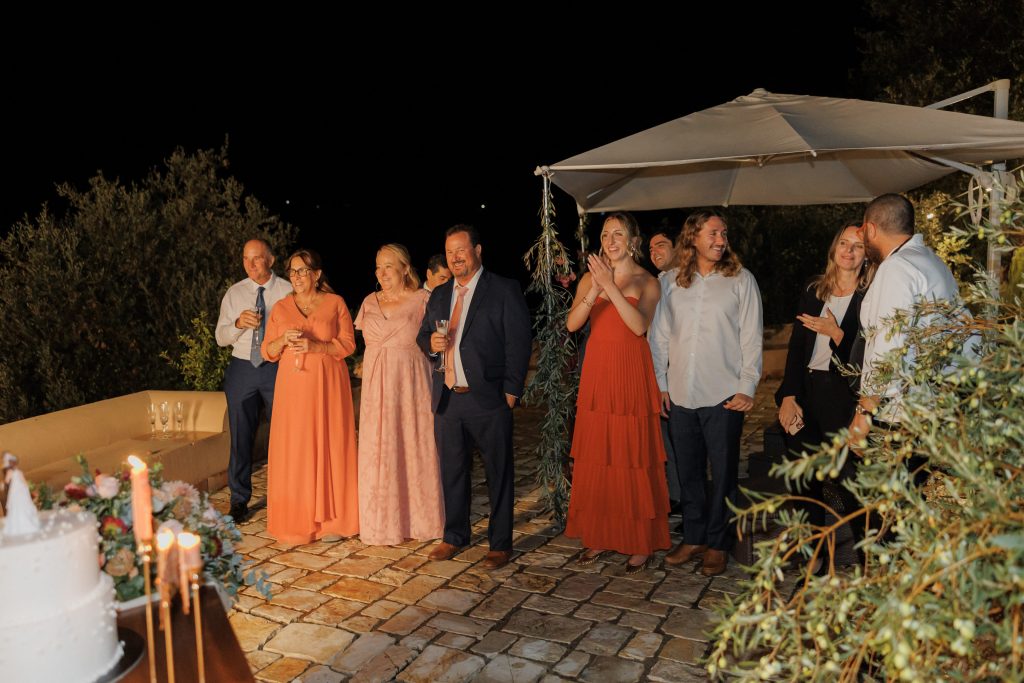 Nik & Ashley · Sicily · see the full wedding →
Hybrid wedding photographer in Italy: prices and hours
Photography and film packages from €1,390, with no extra travel fees. Photography is priced by hours, and analogue film is a separate cost on top (stock, developing and scanning, by the number of rolls); ask us how much film fits your hours, what it costs and what it means for delivery. An extra hour is €200, a second photographer +€890 and a pre-wedding day +€890. A video film is priced the same as photography, and photo plus film is the plain sum. A 20% deposit locks the date, you can book any package and change it later, and if the date moves, the deposit moves with it. See the investment page.
| Coverage | Photography (hybrid) | Photo + video film |
|---|---|---|
| 5 hours | €1,390 | €2,780 |
| 6 hours | €1,590 | €3,180 |
| 7 hours | €1,790 | €3,580 |
| 8 hours | €1,990 | €3,980 |
| Full day, no time limit | €2,190 | €4,380 |
Questions to ask a hybrid film + digital wedding photographer in Italy
If you’re comparing photographers, these questions help you understand whether “hybrid” is a real craft or just a buzzword.
- How much of the day do you typically shoot on film? (Listen for intention, not a random percentage.)
- Which moments do you prefer on film, and why?
- Who develops and scans your film? (A consistent professional lab is a good sign.)
- How do you match film and digital in the final gallery?
- What’s your backup plan if conditions are too dark for film?
- How do you store and protect film while traveling?
- How do you archive the final work?
Hybrid is as much about process and reliability as it is about aesthetics.
Keep planning your Italy celebration
- Italy wedding planning: seasons, regions and logistics
- Our main Italy wedding photographer page
- Italy wedding films and coverage options
- Italy bridal hair and makeup teams
Tell us your names, your date or rough month, where in Italy you are thinking of and how many people you expect, and check your date; we reply within 24 hours. We work in any weather, and a named backup from the team is in every contract. Galleries on our photo page mix both formats, and reviews from couples cover the wait for scans. If you are camera-shy, say so, and we will give simple direction only where it helps.
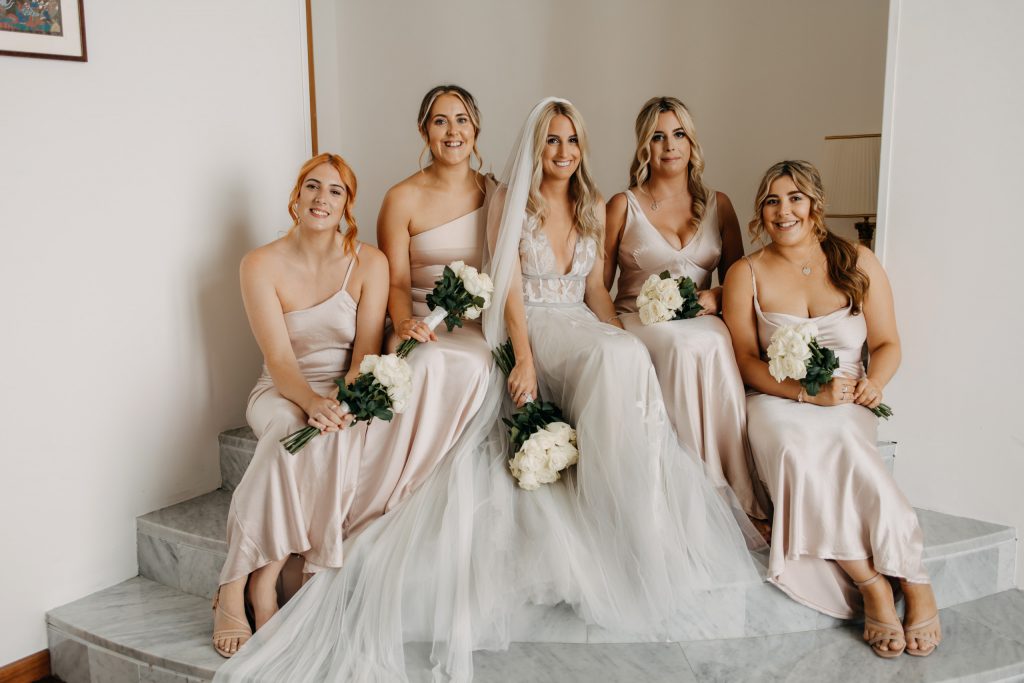 Corey & Niky · Sorrento · see the full wedding →
FAQ: hybrid film and digital weddings in Italy
How much does hybrid wedding photography cost in Italy?
Our photography is €1,390 for 5 hours, €1,590 for 6, €1,790 for 7, €1,990 for 8 and €2,190 for a full day, with no extra travel fees. The share of film rolls in those hours is something we agree with you beforehand. Photo plus a video film is the plain sum.
Is film risky for a destination wedding in Italy?
Film has extra steps: storage, shipping and lab work, so it needs a careful workflow. That is why hybrid is popular. Digital protects the once-only moments, while film is used where it adds the most and conditions allow.
Do we need to pose more if we want film photographs?
No. Film works well with candid moments. It benefits from slightly calmer pockets in good light, such as a 10 to 15 minute portrait window at golden hour, and we give simple direction when needed, especially for camera-shy couples.
Can you shoot film in Italian churches or dark venues?
Sometimes. Many churches are dim and restrict flash, so digital usually leads the ceremony and film is used selectively when the light allows. We agree the plan with you before the day.
Will the gallery feel inconsistent with mixed formats?
It should not. Intentional shooting choices and careful editing make the story feel unified. You will see the gentle character of film, but not a jarring switch between two looks.