Marbella and Estepona offer beach clubs, villas, grand hotels and old-town churches within a short drive, and each format has its own rules for photography.
In short: a luxury wedding photographer in Marbella plans around three things: a late ceremony because summer sunset is around 21:40, wind and sound limits at beach clubs, and the access rules of the venue or church. Choose Marbella for a high-energy weekend and Estepona for more space and a slower pace; for a Catholic ceremony, contact the parish first and ask about flash and positions. Our photography and film packages start from €1,390 with no extra travel fees, and the price table is below.
This guide is for couples planning a destination wedding or micro wedding in Marbella or Estepona who want photography that feels natural, modern and calm, not a day-long photoshoot. We are a team of six documentary wedding photographers and filmmakers who cover the Costa del Sol from Marbella’s old town to the Estepona beach clubs. Our style is documentary with an editorial finish: real moments, good light and gentle direction when you need it.
Below you will find the venue styles, what the light and weather do by season, a church-wedding section, beach-club rules, timelines, our prices and the questions to ask each venue.
Is Marbella or Estepona the right fit for your wedding?
Marbella and Estepona are close on the map, but they photograph and feel different. Choosing the right base changes everything: guest experience, logistics, and the kind of images you’ll end up with.
Marbella: polished, high-energy, fashion-forward
- Best for: black-tie beach glamour, designer details, lively parties, iconic beach clubs.
- Feel: upscale and social, with champagne terraces, late-night music and a weekend-in-the-sun atmosphere.
- Photo notes: strong editorial potential, but timelines matter because midday light can be harsh.
Estepona: relaxed luxury, more space, softer pace
- Best for: villa weekends, family-focused celebrations, garden ceremonies, quieter coastal elegance.
- Feel: calmer and less of a scene, often better value for space and privacy.
- Photo notes: beautiful golden light and more room to breathe—great for candid storytelling.
choose Marbella for a high-style, high-energy weekend and Estepona for the same sunshine with more privacy and a slower rhythm. Our Marbella wedding cost guide shows what each format costs.
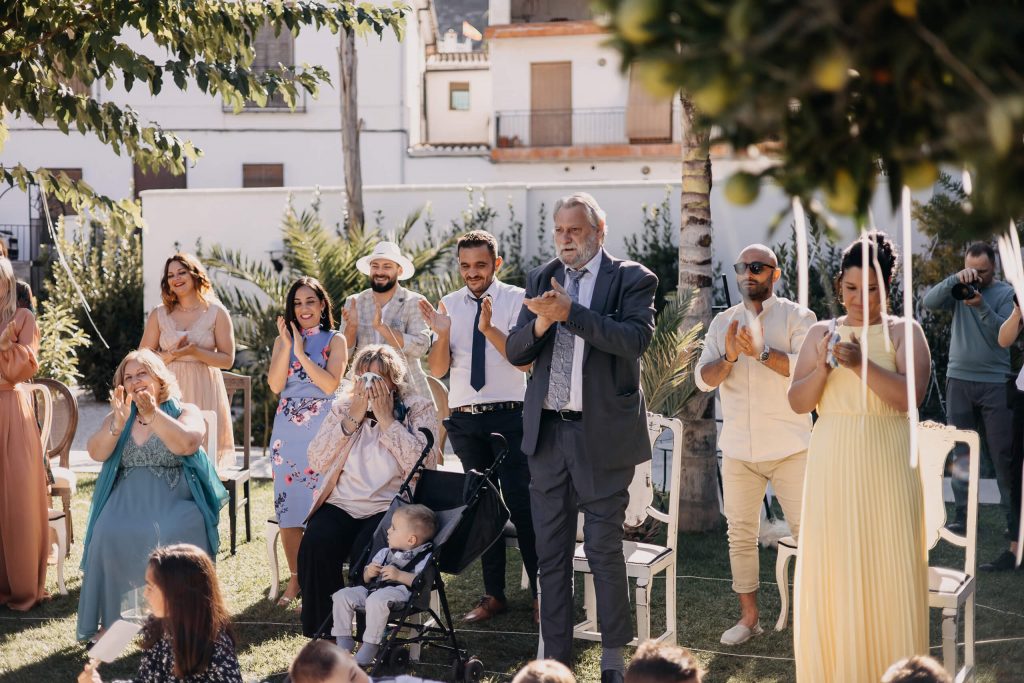 Andreas & Nina · Málaga · see the full wedding →
What luxury weddings look like here (and what changes the experience)
On the Costa del Sol, “luxury” isn’t one look. It’s usually one of these three formats—each with different planning priorities and photography considerations.
1) Beach club weddings (the iconic Marbella look)
Beach clubs are perfect if you want a ceremony with sea views, cocktails that flow straight into dinner, and a party that feels like a curated summer event.
- Pros: built-in atmosphere, great service flow, easy guest experience, strong “destination” feeling.
- Watch-outs: wind, sound limits, privacy, and the fact that the best light is later in the day.
- Photo tip: plan portraits for golden hour and keep the ceremony later (often late afternoon) so you’re not squinting in bright sun.
2) Private villa weddings (privacy, flexibility, multi-day)
Villas are ideal for couples who want a full weekend: welcome drinks, pool day, rehearsal dinner, wedding day, and a brunch send-off—without moving locations.
- Pros: privacy, flexible styling, relaxed timeline, great for multi-day storytelling.
- Watch-outs: logistics (parking, shuttles), noise rules, and the need for a solid weather/heat plan.
- Photo tip: villas photograph best when you use multiple “zones” (getting ready suite, garden, terrace, dinner space) to keep the gallery varied.
3) Luxury hotels & resorts (seamless guest comfort)
Hotels are the smoothest option if you have guests flying in and you want everything in one place—rooms, ceremony, dinner, afterparty, and next-day recovery.
- Pros: professional coordination, strong wet/heat backup options, easy accessibility.
- Watch-outs: some spaces can feel “public” unless you secure exclusivity; timing and access for portraits can be more structured.
- Photo tip: ask about portrait locations on-site (quiet corners, staircases, terraces) and whether you can step away for 10 minutes at sunset.
Pick the venue format that matches how you want to feel on the day—party-forward (beach club), privacy-forward (villa), or comfort-forward (hotel).
Best months, weather realities & light (what couples don’t realize until too late)
Marbella and Estepona are sunny for a big part of the year, but “sunny” doesn’t always mean “comfortable” or “good light at any time.” As photographers, we plan around three things here: heat, wind, and the angle of the sun.
Spring (March–May): fresh, green, and comfortable
- Why couples love it: pleasant temperatures, softer light, fewer crowds than peak summer.
- What to plan for: evenings can cool down; bring layers for outdoor dinners.
- Photography sweet spot: earlier ceremonies are more comfortable than in summer, but golden hour is still your best friend.
Summer (June–August): long days, big energy, serious heat
- Why couples choose it: a summer-holiday feel, long daylight and a lively atmosphere. Sunset is around 21:40 in late June.
- What to plan for: heat can be intense; midday ceremonies are rarely enjoyable. Wind can pick up near the sea.
- Photography sweet spot: late ceremony + sunset portraits + night party coverage (this is where the story really shines).
Early autumn (September–October): warm sea, softer pace
- Why it’s a favorite: still warm, often calmer than summer, beautiful sunsets.
- What to plan for: occasional rain days are possible—choose venues with indoor options that still feel stylish.
- Photography sweet spot: golden hour is soft and the light is kinder for skin tones; sunset is around 20:15 in late September.
Late autumn & winter (November–February): quieter, more flexible, not “beach club season”
- Why it can work: intimate weddings, better venue availability, a more local feel.
- What to plan for: shorter days, cooler evenings, higher chance of rain; you’ll want a strong Plan B that still photographs well.
- Photography sweet spot: mid-day portraits can be lovely when the sun is lower—think elegant, relaxed, and cozy.
The best photos here come from planning around comfort—shade, airflow, and a timeline that respects the sun.
Luxury venue shortlists: beach clubs, villas & hotels to explore
Below are venues and venue types couples often consider for Marbella/Estepona weddings. Always confirm current wedding policies, sound limits, and exclusivity options directly with the venue (these can change season to season).
Beach clubs around Marbella worth checking
- Marriott Marbella Beach Resort – resort setting with beachfront access and guest-friendly logistics
- Puente Romano Marbella – iconic luxury resort atmosphere with multiple spaces for a full wedding weekend
- Nikki Beach Marbella – high-energy beach club style for couples who want a statement party
Photographer’s note: for beach clubs, ask about wind plans (hair, florals, audio), and where you can do portraits away from the busiest areas.
Beach-club rules to check
Spanish beaches are public coastal land, and beach clubs operate on a concession from the coastal authority and the town hall. That means the space for a private ceremony on the sand, the amplified-music limit and the closing time are set by the concession and by municipal noise rules, not only by the club. Ask each club in writing for the latest music time, whether the sand ceremony needs a separate permit, whether a tent or arch may stand on the beach, and what happens when wind or a levante storm closes the sand. Daytime beach photography is usually easier before the club opens to day guests, so a first look at 11:00 or earlier gives you empty sand.
Luxury hotels & resorts (Marbella + Estepona)
- Kempinski Hotel Bahía, Estepona – classic five-star comfort with sea views and strong backup options
- Anantara Villa Padierna Palace – grand, elegant architecture for black-tie and editorial portraits
- The Westin La Quinta – golf resort setting with space for larger guest counts
- Royal Hideaway Corales Beach – modern luxury resort style (great inspiration for couples who love contemporary design)
Photographer’s note: hotels are amazing for stress-free flow—just make sure there’s a quiet, beautiful spot for couple portraits that isn’t a public walkway.
Private villas & estates (the “weekend wedding” choice)
Private villas change the whole experience: you can build a multi-day story, keep guests close, and avoid the “everyone disappears between events” problem.
- Finca Cortesin – refined, private resort/estate atmosphere with a calm, elevated aesthetic
- La Zagaleta – ultra-private setting for couples prioritizing exclusivity and discretion
Photographer’s note: with villas/estates, ask about noise rules, generator needs for outdoor lighting, and whether shuttles are required for guest safety at night.
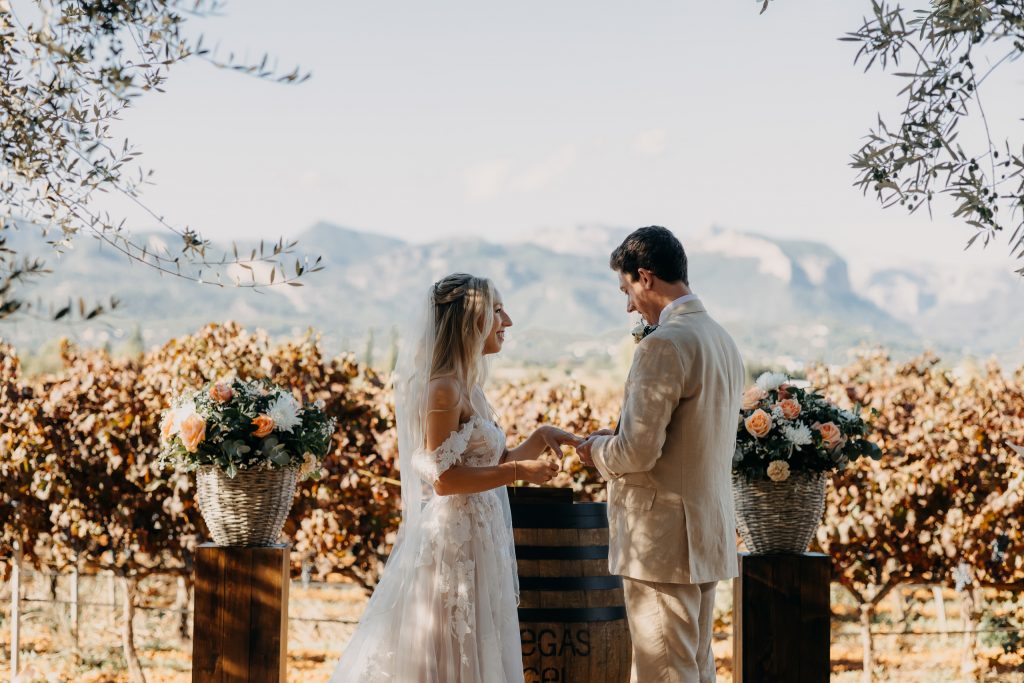 Christopher & Harriet · Mallorca · see the full wedding →
Prices and dates in Marbella and Estepona: our photo prices and what drives the budget
Photography and film packages from €1,390. A beach-club or villa wedding with a late ceremony is usually 8 hours or a full day; a micro wedding with sunset portraits is often 5 or 6 hours.
| Coverage | Photography | Film | Photo + film |
|---|---|---|---|
| 5 hours | €1,390 | €1,390 | €2,780 |
| 6 hours | €1,590 | €1,590 | €3,180 |
| 7 hours | €1,790 | €1,790 | €3,580 |
| 8 hours | €1,990 | €1,990 | €3,980 |
| Full day, no time limit | €2,190 | €2,190 | €4,380 |
An extra hour is €200, a second photographer is +€890, a second filmmaker +€990 and a pre-wedding day +€890. A 20% deposit locks the date, and you can book any package and change it later. There are no extra travel fees. The investment page has the calculator.
We work in any weather and a named backup from the team is in every contract. Browse our photo and video work; for film in the area see our Marbella videographer page.
Whole-wedding budgets on the Costa del Sol vary because the biggest cost drivers are not just guest numbers. They’re about exclusivity, season, complexity, and how many days you’re hosting.
What usually makes the budget jump
- Peak season Saturdays (especially summer and early autumn)
- Exclusive venue buyouts (privacy + control over the space)
- Multi-day hosting (welcome party, pool day, brunch)
- Late-night production (lighting, sound, staging, afterparty spaces)
- Guest logistics (shuttles, multiple hotels, long transfers)
A simple way to choose your “luxury level”
- Comfortable luxury: one main day with thoughtful styling, great food, and a strong photo/video team; fewer moving parts.
- High luxury: premium venue, elevated design, excellent entertainment, and a timeline built around guest experience.
- Ultra luxury: exclusivity, multi-day events, high-end production, and a fully curated weekend with privacy and polish.
Where we’d prioritize spending (for the best experience and photos)
- Venue + food (it defines the guest experience and the flow of the day)
- Planner/coordinator (especially for destination logistics and vendor communication)
- Photo (and film if you want it) (you keep this part forever—choose a team that protects your time and keeps things calm)
- Lighting (the secret weapon for dinner and dancing photos)
The best weddings are not the most expensive ones: they are the ones with the smoothest flow, a comfort plan for heat and a timeline that protects meaningful moments.
Sample timelines that work for heat, sunsets & beach club energy
Below are example structures we often recommend on the Costa del Sol. Your exact timing will depend on your venue rules, season, and whether you want a first look.
Timeline A: Villa wedding with a relaxed, editorial feel (no rush)
- Getting ready in separate suites (keep rooms tidy and near window light)
- First look in a shaded garden or terrace
- Family photos early, before guests get warm and restless
- Ceremony later afternoon (shade plan + water station)
- Cocktail hour with candid coverage
- Golden hour portraits (10–15 minutes is enough if we plan it well)
- Dinner as the temperature drops
- Party with lighting that flatters skin tones and keeps the atmosphere cinematic
Timeline B: Beach club wedding (ceremony + party-forward)
- Getting ready at a nearby hotel (avoid long transfers in formalwear)
- Arrive early for quick venue details + couple portraits before guests arrive
- Ceremony late afternoon
- Cocktails with live music / DJ
- Sunset portraits (step away briefly for the warmest light of the day)
- Dinner
- Afterparty (plan a clear “switch” moment: lighting change, music shift, or a surprise entrance)
Timeline C: Micro wedding / elopement with luxury touches
- Slow morning (breakfast, letters, getting ready without pressure)
- Portraits in old town streets or a quiet coastal viewpoint
- Intimate ceremony (cliffside, garden, or terrace—privacy matters)
- Celebration meal at a beautiful restaurant
- Golden hour walk on the beach for natural, candid images
in Marbella/Estepona, moving the ceremony later and protecting 10 minutes for sunset portraits will change your whole gallery.
Church and Catholic weddings in Marbella and Estepona
Many couples ask for a Catholic wedding photographer in Marbella. The old town of Marbella has the parish church of the Encarnación on Plaza de la Iglesia, and Estepona’s old town has its own parish church; both are working parishes, so the priest decides what is allowed. The questions to ask are the same everywhere: the date and time the parish can offer (often tied to Mass times), what documents the couple must provide, whether a Catholic ceremony in Spain has civil effects for your situation, and the parish’s rules for photographers.
On the legal side, a civil wedding in Spain needs one partner to be Spanish or resident, so most visiting couples marry at home and hold the ceremony in Spain as a blessing or symbolic ceremony; see getting married in Spain as a foreigner and city hall vs church weddings, and confirm with the diocese of Málaga and the registry. For photography inside a church we usually agree these points with the priest: no flash during the ceremony, where we may stand (often the side aisles and the back, not the sanctuary), whether a second angle is allowed, and how long the church is free before and after for group photos. Plan shoulders and knees covered for guests, a 45 to 60 minute service, and portraits in the old-town lanes afterwards; the Casco Antiguo of Marbella is shaded in the afternoon and lit by warm stone, while its main square fills up by 18:00 in summer.
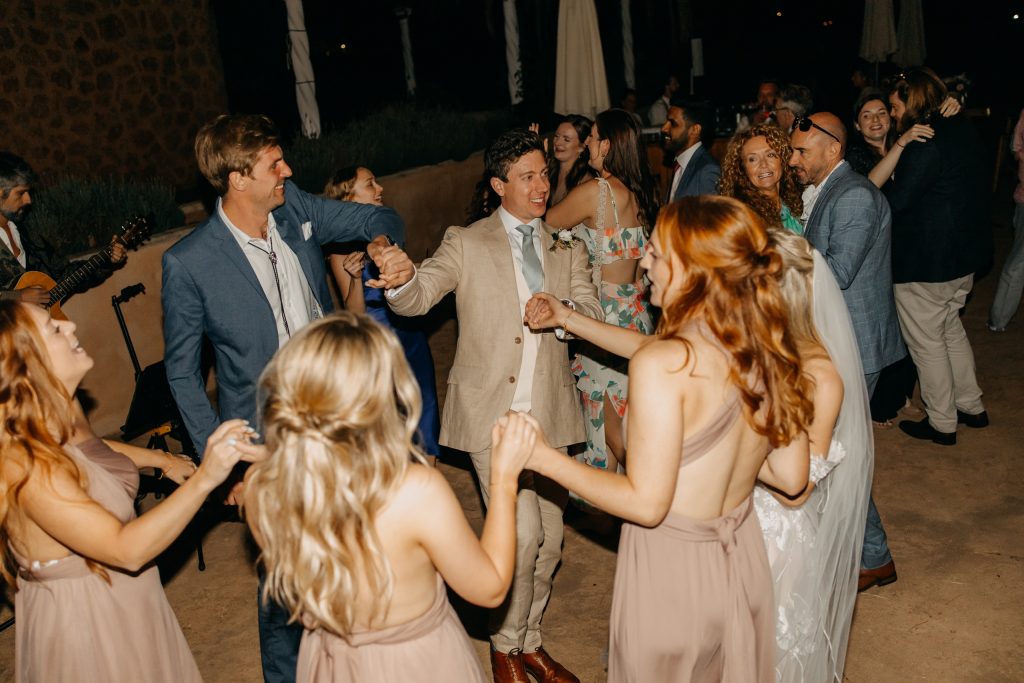 Christopher & Harriet · Mallorca · see the full wedding →
Travel & logistics: what makes destination weddings here feel easy
Most guests fly into Málaga (AGP), and then you’re balancing transfers, accommodation clusters, and how to keep everyone comfortable in the heat.
Three logistics decisions that reduce stress
- Choose one “home base” area (Marbella center, Golden Mile, Puerto Banús, or Estepona) so guests aren’t scattered.
- Plan shuttles if you’re using a villa—it’s safer, smoother, and keeps the party going.
- Build in buffer time for traffic, parking, and outfit changes (especially with beach clubs and summer weekends).
Heat-proofing your day (small things that matter)
- Water available everywhere (not just at the bar)
- Shade for ceremony seating
- Fans or cooling options for outdoor dinners
- A plan for hair/makeup touch-ups before the ceremony and before dinner
Guest comfort is part of luxury—shade, transport, and a calm schedule are what people remember.
How we photograph luxury weddings in Marbella & Estepona (documentary + editorial, without the awkward posing)
Luxury doesn’t have to mean stiff. Our approach is built for couples who want to actually live their day: we focus on real moments, flattering light, and gentle direction that never hijacks the timeline.
What you can expect
- Calm guidance when you need it (where to stand, what to do with your hands, how to walk in a way that feels natural)
- Space for real moments (we don’t over-direct; we watch for the story)
- Light-first planning (we help shape a timeline that avoids harsh midday sun and protects golden hour)
- Discreet coverage for high-end venues and privacy-minded couples
Photo + film: when it’s worth adding video
If you’re hosting a multi-day weekend, have meaningful speeches, or want to remember the atmosphere (music, voices, movement), film adds a layer photos can’t.
- Best for: welcome parties, vows, speeches, first dance, and the “in-between” energy of cocktail hour.
- How it stays relaxed: a well-matched team works quietly and coordinates with photo so you’re not being pulled in two directions.
The best luxury coverage feels invisible on the day—and priceless afterwards because it’s honest, beautiful, and complete.
Questions to ask venues (especially beach clubs and villas)
These questions save you from the most common surprises: sound limits, privacy issues, and timelines that don’t match the light.
- What are the sound rules and the latest possible end time?
- Is exclusive use available, and what does it include?
- Where is the Plan B for wind or rain, and does it still feel beautiful?
- Are there restrictions on candles, fireworks or amplified music (and, where permitted, drones)?
- What’s the parking/shuttle plan for guests and vendors?
- Where can the couple do portraits with privacy and good light?
- What time can vendors access the space for setup?
Related guides
- A practical guide to planning a wedding anywhere in Spain
- How we photograph destination weddings across Spain
- Spain wedding films and photo + film coverage
- Finca Cortesin access and protocol
- Málaga and Nerja and eloping in Andalusia
- Check your date, happy clients and about the team
 Christopher & Harriet · Mallorca · see the full wedding →
FAQ: luxury wedding photographer in Marbella and Estepona
When should we book our Marbella wedding photographer?
Peak-season Saturdays book earlier than couples expect. If you have a venue or a short list of dates, ask us to check availability now; we reply within 24 hours, a 20% deposit locks the date, and you can change the package later.
How much is a luxury wedding photographer in Marbella?
Our photography runs from €1,390 for 5 hours to €2,190 for a full day, film is priced the same, and photo plus film is the sum. An extra hour is €200 and a second photographer +€890. There are no extra travel fees, and the investment page has a calculator.
Can you photograph a Catholic church wedding in Marbella?
Yes. We agree the rules with the priest in advance: no flash during the ceremony, where we stand and how long the church is available for group photos. Contact the parish early, because dates tie to Mass times and the documents take weeks to prepare.
Is a sunset ceremony always the best idea on the Costa del Sol?
Not always, but a later ceremony is more comfortable and photographs better than midday. Late afternoon plus sunset portraits usually works best; in late June sunset is around 21:40. For an earlier time we plan shade, angles and portraits later.
What if it is windy at the beach club?
Wind is common near the sea. Plan heavier florals, secure décor, discreet microphones and a sheltered ceremony spot. For portraits we place you where hair and outfits look intentional, and a levante storm can also close the sand, so the club needs a covered backup.
Do we need a planner for a destination wedding here?
In most cases yes, especially for villas, multi-day events or anything with production. A planner keeps vendor communication smooth and protects your time. Our Andalusia planners guide lists planners we checked.