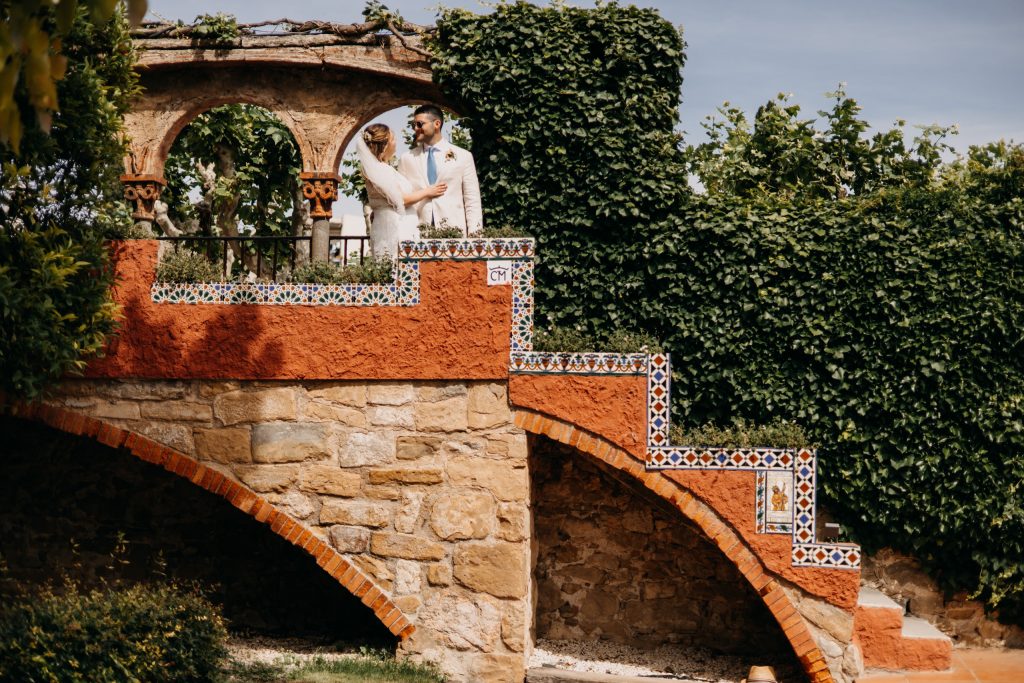
Barcelona has more good backdrops than a wedding day has hours, so the useful list is short and says when to go.
In short: the six locations we plan around are the Gothic Quarter (best at sunrise to 09:00), Bunkers del Carmel (sunrise or the hour before sunset), Montjuïc (late afternoon to sunset), Parc de la Ciutadella (morning), the Barceloneta seafront (sunrise or the last hour of light) and Passeig de Gràcia (early morning). Small, natural-light sessions are normal in public space; large setups need the council’s permission, and Park Güell does not grant photo shoots of this kind. Our coverage starts at €1,390 for 5 hours.
We are a team of six documentary wedding photographers and filmmakers, and Barcelona is one of the cities where a little planning gives you the most freedom, especially around sunrise and sunset. Below: a six-spot table with permit notes and best hours, then the three-spot route (Gothic Quarter, Bunkers del Carmel, Montjuïc) in detail, timing templates and what our coverage costs. For the full picture of our work in the city see our Barcelona wedding photographer page, and for a city hall ceremony see our Barcelona City Hall elopement guide.
Six Barcelona wedding photo locations at a glance
Times are for a late-June wedding, when sunrise is around 06:20 and sunset around 21:30. In December sunrise is around 08:15 and sunset around 17:25. Permit notes are our working rules, not legal advice: for anything beyond a small crew, ask the city council (Ajuntament de Barcelona) before the date.
| Location | Mood | Permit and access note | Best hour |
|---|---|---|---|
| Gothic Quarter | Old stone streets, arches, small squares | Public streets. Small natural-light portraits are normal; tripods, stands and blocked paths can draw attention. Taxis cannot enter the narrowest lanes. | 06:30 to 09:00 |
| Bunkers del Carmel | 360-degree skyline view | Public viewpoint on a hill. Uneven ground, no shade, busy at sunset. Small sessions only. | Sunrise, or 20:30 to 21:30 |
| Montjuïc | Gardens, stairs, terraces, viewpoints | Public park with several zones; choose one in advance. Some gardens and buildings have their own opening hours and rules. | 19:00 to 21:30 |
| Parc de la Ciutadella | Lake, cascade fountain, palm walks | Public park. Small sessions are normal; ask the council for anything larger. | 08:00 to 10:00 |
| Barceloneta seafront | Sand, sea, low light | Public beach and promenade. Very busy by 10:00 in summer; wind is common. | Sunrise, or 20:45 to 21:30 |
| Passeig de Gràcia (Eixample) | Wide pavements, Modernista facades | Public street. Interiors of landmark buildings need tickets and their own permission. | 07:00 to 09:00 |
Park Güell is deliberately not on the list. The park’s own information page says it tickets visitors in advance online and that requests for photo or film authorisation not tied to scientific or training purposes will not be granted, so we do not plan wedding portraits there. If you want it for a visit as a couple, buy tickets in advance and do not expect a shoot.
 Nacho & Bea · Mallorca · see the full wedding →
Why the Gothic Quarter, Bunkers and Montjuïc work together
Think of this trio as a Barcelona greatest-hits route with three different moods:
- Gothic Quarter: intimate, textured, old-world streets, best early.
- Bunkers del Carmel: the skyline moment, best at sunrise or in the last hour of light.
- Montjuïc: gardens, viewpoints and stately architecture, best from late afternoon to sunset.
They also solve a common problem: couples want variety but not a day in taxis. With the right order you keep travel time reasonable and still get a gallery that feels like a full story.
in Barcelona, light and crowds matter more than distance on a map.
Quick reality check: crowds, permits and what you can control
Barcelona is a living city, and that is part of the charm, but it means you want a plan that works even when conditions are not perfect.
What is usually predictable
- Gothic Quarter is quietest at sunrise and gets busy fast.
- Bunkers is popular every day; sunrise is the calmest window.
- Montjuïc gives you more space to breathe, especially in gardens and wider paths.
What is not predictable
- Street cleaning, deliveries, and temporary closures in the old town.
- Wind at viewpoints (Bunkers and some Montjuïc terraces can be breezy).
- Seasonal crowd spikes (weekends, holidays, cruise ship days).
Permits can apply for certain kinds of setups (large crews, tripods, lighting stands, blocked pathways). For most elopements and wedding portraits with a small footprint, we keep it simple: natural light, minimal gear, respectful movement and flexible spots. If you plan anything bigger, ask the Ajuntament before the date rather than on the day.
Plan a best-case route, but choose locations that still look good if we move 200 metres.
The best time of day for each spot
Gothic Quarter: sunrise to early morning
The Gothic Quarter photographs best when the streets feel like they belong to you. Early morning gives you:
- Cleaner backgrounds (fewer tourists, fewer open umbrellas and signage clutter).
- Softer light bouncing off stone walls.
- A calmer pace, which helps if you are nervous in front of the camera.
Midday can still work, but it becomes more about finding shade and tighter compositions.
For the Gothic Quarter, earlier is almost always better than “later but convenient.”
Bunkers del Carmel: sunrise or the hour before sunset (not the middle)
Bunkers is all about the view over the Eixample grid to the sea, and the feeling changes completely with the hour.
- Sunrise (around 06:20 in late June): quiet, intimate, pastel sky, and you can move around without feeling watched.
- The hour before sunset into dusk: warm light, then the city lights coming on, but expect a crowd sitting along the old gun platforms.
- Midday: harsh light, heat and a crowd settled in for the afternoon, usually the least photo-friendly.
At Bunkers you choose your moment, and sunrise is the easiest for couples who want privacy.
Montjuïc: late afternoon to sunset (plus a great Plan B)
Montjuïc is flexible. You can build a whole portrait session here without it feeling repetitive: gardens, staircases, viewpoints, and pockets of shade.
- Late afternoon gives flattering light and more depth in the greenery.
- Sunset works beautifully at viewpoints with the city behind you.
- If it’s hot, Montjuïc offers shade and breezier areas.
Montjuïc is where the day slows down: the gardens around the Mirador del Palau Nacional and the quieter terraces give room for natural photos.
 Tom & Connie · Costa Brava · see the full wedding →
Three route options for the Gothic Quarter, Bunkers and Montjuïc
Below are three proven ways to combine the Gothic Quarter, Bunkers del Carmel, and Montjuïc. The best route depends on whether you’re eloping, doing a micro wedding, or fitting portraits into a full wedding timeline.
Route A: Sunrise city + skyline (best for elopements and camera-shy couples)
- Sunrise: Gothic Quarter (quiet streets, intimate moments)
- Morning: quick coffee / reset (this matters more than people think)
- Late morning: Montjuïc gardens/viewpoints (shade + variety)
- Optional: sunset at Bunkers (only if you’re up for a second peak moment)
Why it works: you start the day when Barcelona is calm, and you’re not fighting crowds. You also get a natural “story arc” from old streets to open views.
Sunrise gives you the most privacy per minute of shooting time.
Route B: Classic evening light (best for couples who want warm light and do not mind people)
- Late afternoon: Gothic Quarter (focus on narrow shaded streets)
- Last hour of light: Montjuïc (gardens and viewpoints)
- Dusk: Bunkers del Carmel (city lights and skyline)
Why it works: it is the warmest-light version of the route, and it fits well around a ceremony and dinner.
If you choose this route, accept that Bunkers will be lively and plan wide skyline frames rather than quiet close-ups.
Route C: Wedding-day efficient (best for full weddings with guests)
- Short early session: Gothic Quarter (20–40 minutes, very targeted)
- Back to hotel/venue: ceremony + celebration
- Sunset portraits: Montjuïc (easy variety in one area; sunset is around 21:30 in late June)
- Skip Bunkers unless you can do sunrise the next day (or a pre-wedding session)
Why it works: you protect the guest experience and keep portraits from taking over the day.
on a full wedding day, Montjuïc is usually the best “one-stop” portrait solution.
Timing templates you can copy (with realistic buffers)
These sample timelines include the unglamorous parts: walking, water breaks, taxis across the city and a moment to breathe.
Template 1: Barcelona elopement morning (2.5–4 hours)
- Sunrise + 20 min: meet in/near the Gothic Quarter
- 45–60 min: Gothic Quarter photos (slow walk, a few key corners)
- 20–30 min: coffee + touch-ups + reset
- 25–40 min: travel to Montjuïc (taxi recommended)
- 60–90 min: Montjuïc gardens + viewpoints
Build in a reset break in a café on Via Laietana or in El Born; faces relax and the next set of photos looks more natural.
Template 2: Sunset portraits around a ceremony (60 to 90 minutes total)
- 15–20 min: quick portraits near ceremony location (low travel)
- 10 min: travel buffer
- 35 to 50 min: Montjuïc evening loop (one garden and one viewpoint)
- 10 min: return buffer
One strong location done well beats three locations done rushed.
Template 3: Two-day approach (best for destination weddings)
- Day 1 (pre-wedding or welcome evening): Gothic Quarter + a relaxed drink stop
- Day 2 (wedding day): Montjuïc at sunset (or a short nearby portrait window)
- Optional sunrise on Day 3: Bunkers del Carmel for the skyline moment
This is the easiest way to get variety without sacrificing time with your people.
Spreading locations across days is the least rushed option, with more experience and fewer transfers.
How to keep the experience relaxed
Many couples tell us they love photos but hate the idea of posing. The good news: these locations carry the picture, so you do not need complicated direction.
What works especially well in Barcelona
- Walking prompts (slow strolls, hand squeezes, stopping to look up at architecture).
- Micro-moments (fixing a jacket, adjusting a veil, sharing a quiet joke).
- Using the city (doorways, arches, steps, and corners that give you privacy for 30 seconds).
What we avoid (because it kills the mood)
- Long, static posing sequences in busy areas.
- Over-planning every frame instead of letting the day breathe.
- Walking too far in uncomfortable shoes without a backup plan.
The best images usually come from calm pacing and good light, not from more posing.
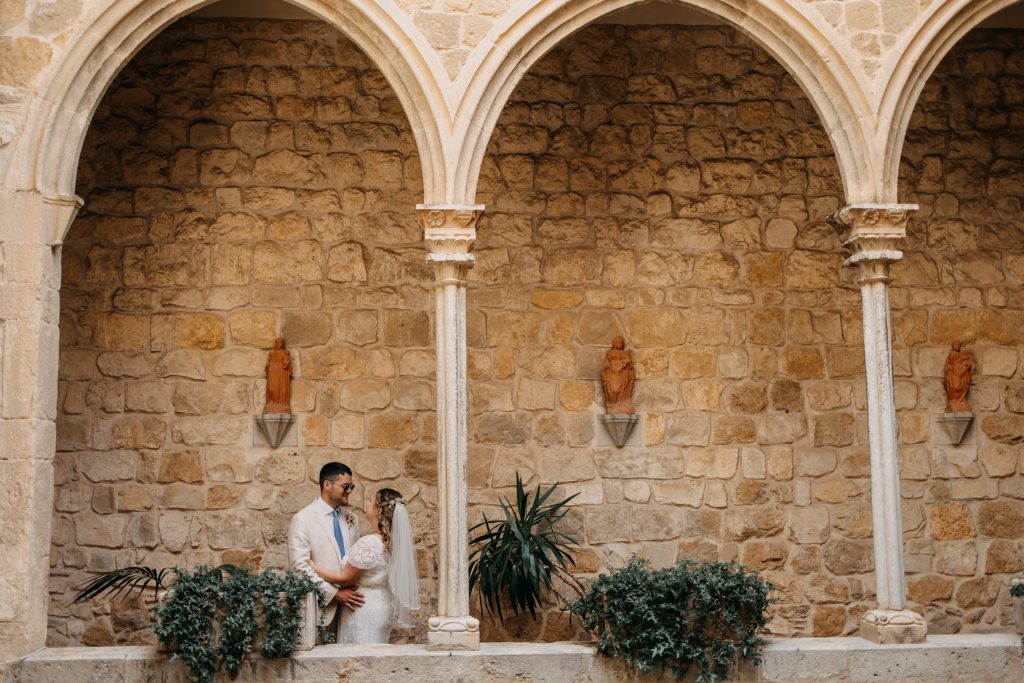 Tom & Connie · Costa Brava · see the full wedding →
Logistics that matter more than you think
Getting between locations
- Gothic Quarter: plan to walk slowly; taxis can be tricky right in the narrowest areas, so choose a clear pickup point.
- Bunkers del Carmel: expect a walk and some uneven ground; choose stable shoes and bring water.
- Montjuïc: a large hill, so decide in advance which zone you want (gardens or viewpoints) so you are not zig-zagging.
What to bring (small kit, big impact)
- Comfortable shoes for walking between photo spots (you can switch back to dress shoes for a few minutes at a time).
- Water, especially in warmer months.
- Hair pins / a small comb (wind happens).
- A light layer for sunrise or breezy viewpoints.
- Blotting paper or a small towel if you’re worried about heat.
Comfort is not less stylish; it lets you stay present and look like yourselves.
Weather and season notes for Barcelona (photo-focused)
Barcelona works for photos year-round, and each season has its own character. This is what couples feel most on the day:
Spring
- Comfortable temperatures and softer light.
- Great for walking routes and longer sessions.
Summer
- Hotter and busier; midday can feel intense.
- Sunrise sessions give the most privacy and the coolest air.
Autumn
- Warm tones, pleasant evenings, and a slightly calmer feel after peak summer.
- The hour before sunset is especially good at Montjuïc; sunset is around 19:15 in early October and about 17:40 once the clocks change at the end of the month.
Winter
- Fewer crowds and a more local feel.
- Shorter days, so we plan tighter around the best light windows.
In warmer months, build your day around early and late light and treat midday as rest time.
What our coverage costs for a Barcelona photo day
Our shortest package is 5 hours; a morning route like Template 1 plus a ceremony and lunch fits it. Photography and film packages from €1,390:
| Coverage | Photography | Film | Photo + film |
|---|---|---|---|
| 5 hours | €1,390 | €1,390 | €2,780 |
| 6 hours | €1,590 | €1,590 | €3,180 |
| 7 hours | €1,790 | €1,790 | €3,580 |
| 8 hours | €1,990 | €1,990 | €3,980 |
| Full day, no time limit | €2,190 | €2,190 | €4,380 |
An extra hour is €200, a second photographer is +€890, a second filmmaker +€990 and a pre-wedding day +€890. A 20% deposit locks the date. There are no extra travel fees, and you can book any package and change it later. The investment page has the calculator.
Small additions that improve the story
- A quiet café stop between locations: natural candid moments, and it slows the pace.
- A champagne toast somewhere with a view: simple, not staged.
- A short just-married walk after the ceremony before meeting guests.
- Dusk photos if you finish at Bunkers; the city lights come on after about 21:45 in summer.
Key point: one well-timed stop gives more than ten rushed ones. For a two-day plan, the pre-wedding day add-on (+€890) covers the Gothic Quarter or a sunrise session the day before. Read the investment page and contact us; we reply within 24 hours.
The Gothic Quarter, Bunkers del Carmel and Montjuïc give you a complete Barcelona story if you build the plan around light, crowds and breathing room. Choose the route that matches your energy: sunrise for privacy, evening light for warmth, or the wedding-day plan that protects time with guests. We will help you map a timeline that fits your ceremony, your comfort level and the season.
More to read: the Spain wedding hub, our photography across Spain, our wedding films, Barcelona wedding films, Barcelona hair and makeup, photo and video work.
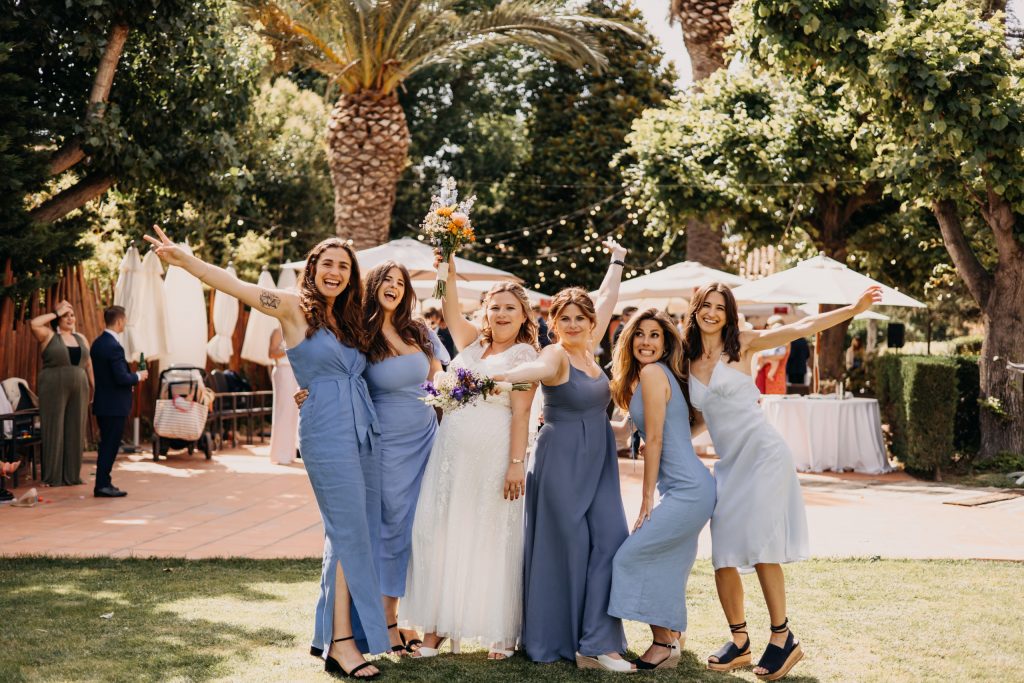 Tom & Connie · Costa Brava · see the full wedding →
FAQ: Barcelona wedding photo locations, permits and timing
Do we need a permit to take wedding photos in Barcelona?
For a small session in public streets and parks, with natural light and no stands, couples normally just go. Larger setups need the Ajuntament de Barcelona’s permission, so ask before the date. Park Güell does not grant photo shoots of this kind, according to its own information page.
How long do we need to photograph all three locations?
For a relaxed pace, plan on 3–5 hours including travel and short breaks. You can do it faster, but it starts to feel like a race, especially across the city from El Carmel to Montjuïc with a change of outfit or a small group.
Is sunrise really worth it in the Gothic Quarter?
Yes, if you want the streets to feel intimate. The Gothic Quarter’s biggest challenge is crowds. Sunrise, around 06:20 in late June, gives you space and cleaner backgrounds, and the photos look more natural.
Can we do Bunkers del Carmel in a wedding dress?
Usually yes, as long as you’re comfortable with a bit of walking and uneven ground. We recommend bringing a second pair of shoes and treating the dress kindly (lift it when needed, move slowly, and plan a little buffer time).
What if it’s windy at Bunkers or on Montjuïc?
Wind is common at viewpoints. We choose sheltered angles, turn you so hair and fabric blow away from your faces, and take the key frames when the gusts drop. A few pins and a flexible hairstyle make a big difference.
We are camera-shy. Will these places feel too public?
They can, at peak times. That’s why timing matters more than anything. Sunrise in the Gothic Quarter and a quieter loop in Montjuïc are usually the most comfortable. We also guide you with simple, low-pressure direction so you are not performing for the crowd.