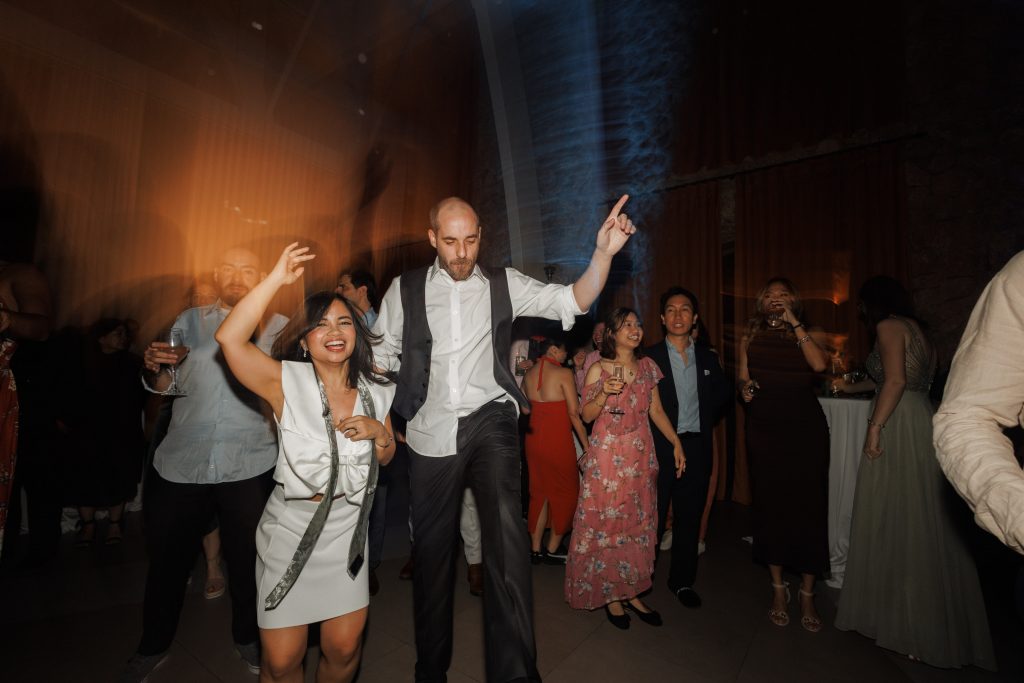
Salamanca is a sandstone city you can cover on foot, so a wedding here can run from getting ready to the last dance without a coach.
In short: we photograph and film weddings and elopements in Salamanca, and photography and film packages start from €1,390 with no extra travel fees. The old town is compact, the stone turns gold in the last hour before sunset, and the main constraints are the heat of summer afternoons, the crowds on Plaza Mayor and the rules of each church or cloister. Below you will find our prices, the spots that work, the venues to check and timelines built around the light.
We are a team of six documentary wedding photographers and filmmakers, and in Salamanca we work on foot, between the sandstone plazas, the cathedral lanes and the Tormes. Our style is documentary with an editorial eye—natural moments, beautiful light, and calm direction when you need it (especially if you’re camera-shy).
This guide is for couples planning a city wedding, a micro wedding or an elopement in Salamanca, and it is written around the questions people actually send us: which plazas work for portraits, when the stone is at its best, and how to handle a church or cloister ceremony.
Why Salamanca works so well for a destination wedding
Salamanca is a “stone and light” city. The warm sandstone (especially around the old town) photographs beautifully from late afternoon into blue hour, and the city’s layout makes it easy to move between ceremony, portraits, and celebration without long transfers.
- Iconic backdrops without needing a car: plazas, cloisters, bridges, and university courtyards are close together.
- Elegant, old-world atmosphere: perfect for black-tie, classic, or editorial styling.
- Great for multi-day hosting: welcome tapas, a relaxed rehearsal-style stroll, then the wedding day.
- A real city, not a set: your photos feel alive—students, cafés, evening paseo energy.
Salamanca is ideal when you want a wedding that feels architectural and classic, but still relaxed and walkable for guests.
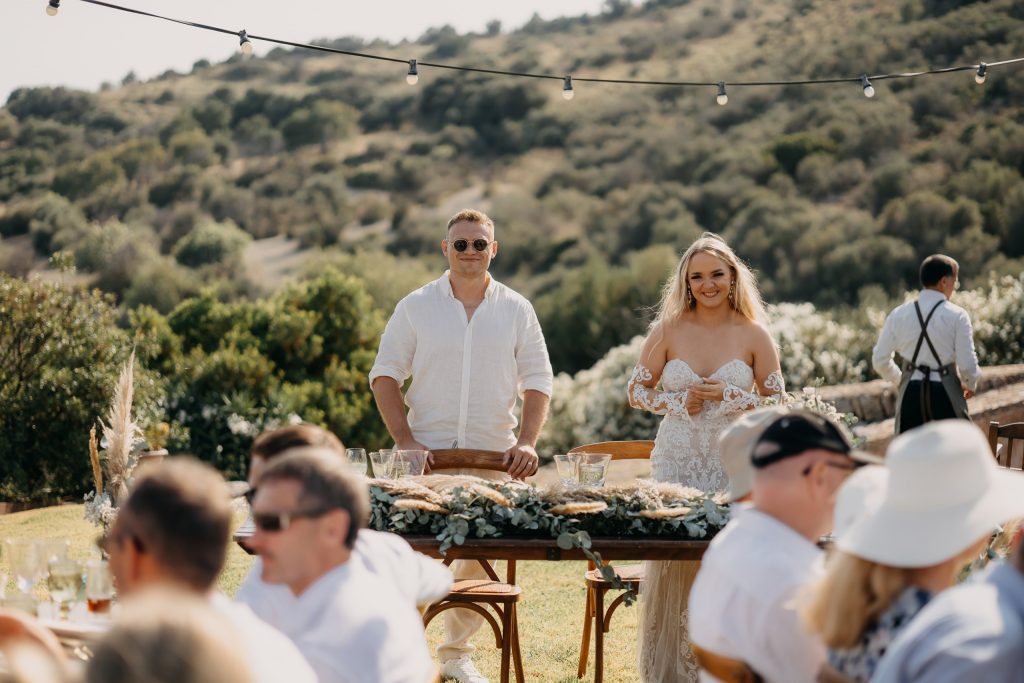 Andy & Leesha · Mallorca · see the full wedding →
Best seasons & dates in Salamanca (what couples don’t realize)
Salamanca sits at about 800 metres on the Castilian plateau, which means hot afternoons in summer, cool nights even in July and real frost in winter. In late June the sun sets around 21:55, in December around 18:00, so the same ceremony hour gives completely different light across the year. Local dates also matter: Holy Week fills hotels, the Monday after Easter (Lunes de Aguas) sends the city down to the river, and the September fiestas around 8 September bring noise and crowds into the centre.
Spring (March–May): fresh energy, changeable weather
- Pros: comfortable temperatures, lively city feel, softer light.
- Watch for: occasional rain and wind; evenings can cool down fast.
- Photo tip: plan portraits for late afternoon; keep a stylish umbrella option for a “rain plan” that still looks intentional.
Spring is beautiful, but build a flexible timeline so a short shower doesn’t rush your portraits.
Summer (June–August): long days, strong sun, late dinners
- Pros: long daylight, warm nights, buzzing terraces.
- Watch for: heat and harsh midday light; ceremonies often feel better later in the day.
- Photo tip: do a short “quiet portraits” session in shaded streets, then your main portraits near sunset when the stone glows.
In summer, the best photos happen later—don’t force a noon portrait session in full sun.
Autumn (September–November): golden tones and calmer streets
- Pros: warm light, comfortable days, a slightly calmer pace after peak summer.
- Watch for: earlier sunsets as the season progresses; evenings can be chilly.
- Photo tip: move the ceremony earlier than you think in late autumn so you still get daylight portraits.
Autumn is often the sweet spot—just plan around the earlier sunset.
Winter (December–February): quiet, romantic, and very editorial
- Pros: fewer crowds, moody skies, cozy indoor celebrations.
- Watch for: cold evenings; some outdoor plans need a stronger backup.
- Photo tip: winter is perfect for a “city elopement” feel—short outdoor portraits + warm interiors + night shots in the plaza.
Winter weddings can look incredibly high-end in photos—just prioritize comfort and a strong indoor plan.
Plazas & photo locations in Salamanca (what’s actually practical)
Salamanca has dozens of beautiful corners, but not all of them work equally well on a wedding day. The best locations are the ones that combine: (1) flattering light, (2) space to breathe, and (3) easy access from your venue.
Plaza Mayor: iconic, best used with intention
Plaza Mayor is the “must-see,” but it’s also the most public. We usually recommend using it in one of two ways:
- Early-morning portraits (quiet, clean backgrounds, calm energy).
- Blue hour / night portraits (romantic lights, lively atmosphere, quick 10-minute session).
Plaza Mayor is strongest as a short, planned moment, not a long portrait block.
University area: courtyards, stone textures, and academic elegance
The university city feel is what makes Salamanca feel different from many other Spanish destinations. Think: cloisters, carved façades, and narrow lanes that naturally frame you without heavy posing.
- Best for: editorial couple portraits, first look, quiet walking shots.
- Timing: late afternoon for warmth; midday can work if we stay in shade and use doorways/arches.
The university quarter gives you “old-world Europe” photos without needing a staged setup.
Cathedral surroundings: dramatic scale (and a respectful approach)
The cathedral area is visually powerful—huge stone, strong lines, and a sense of occasion. It’s also a place where respectful behavior matters, especially around ceremony times.
- Best for: a few wide shots that show scale, plus intimate close-ups in quieter corners.
- Timing: avoid peak foot traffic; consider a short session right after the ceremony while guests move to cocktails.
Cathedral photos are about two or three strong frames, not an hour of portraits.
Puente Romano & river views: open space and sunset potential
If you want a little breathing room away from the old town streets, the river area can be a great contrast—especially near sunset when the sky opens up.
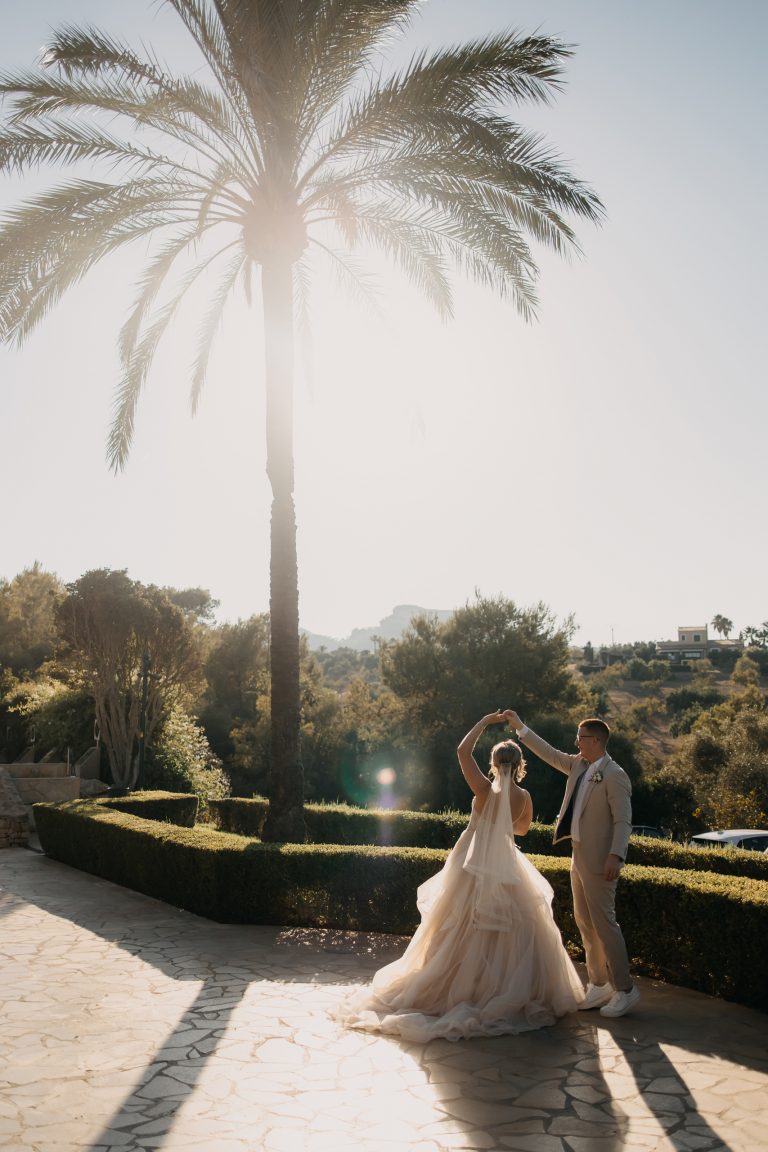
- Best for: sunset silhouettes, veil movement, relaxed walking shots.
- Logistics: plan comfortable shoes or a quick change; watch wind on the bridge.
The bridge area is your “big sky” option—perfect if you want variety beyond stone streets.
Beyond the big four: small spots that keep portraits calm
Three smaller places repay a short visit. The Patio de Escuelas, in front of the university façade, is where visitors hunt for the carved frog, so go early or late. The Huerto de Calixto y Melibea, a small walled garden under the cathedral, gives green and stone in a few steps. Casa Lis, the Art Nouveau and Art Deco museum beside the Tormes, has a glass-and-iron façade that photographs well from outside. Entry to any monument or museum interior needs the owner’s agreement, so ask before you build a plan around a courtyard.
Venues & celebration spaces in and around Salamanca
Salamanca weddings often look best when the venue matches the city’s character: historic halls, refined hotels, and spaces that can handle a late Spanish dinner schedule. Below are practical venue types to consider, plus a shortlist of real places to explore.
1) Historic hotels for an elegant, guest-friendly wedding
Hotels are often the smoothest option for destination weddings: easy logistics, on-site getting ready, and a built-in rain plan. Look for a venue with a bright suite, a calm lobby area, and a ceremony/cocktail space that doesn’t feel like a conference setup.
- In the old town: a converted convent or palace hotel a few minutes’ walk from the cathedral keeps the getting-ready suite, the ceremony and the portrait walk on foot.
- Across the river: a hotel on the south bank of the Tormes looks back at the cathedral skyline, which suits sunset cocktails; guests then need a short transfer into town.
Choose a hotel with beautiful natural light where you’ll actually spend time (getting ready + cocktails), not just a pretty façade.
2) Palaces, convent-style buildings & stone courtyards (the “wow” factor)
For couples who want Salamanca to feel cinematic and formal, historic buildings with courtyards and cloisters can be incredible. The key is to confirm how the spaces flow: where guests gather, where music is allowed, and what the indoor backup looks like.
with historic spaces, the best experience comes from a clear plan for guest movement (ceremony → cocktails → dinner → party).
3) Countryside fincas & estates near Salamanca (space, privacy, late-night parties)
If you want more privacy, more flexibility with music, and a “weekend wedding” feel, look at estates outside the city. These are often better for larger guest counts and for couples who want everything in one place.
- Look for: shaded ceremony options, a strong indoor room, and accommodation nearby (or on-site).
- Photo tip: estates are perfect for a relaxed golden-hour walk while guests enjoy cocktails.
Countryside venues are the easiest way to get privacy + a real party timeline without worrying about city noise rules.
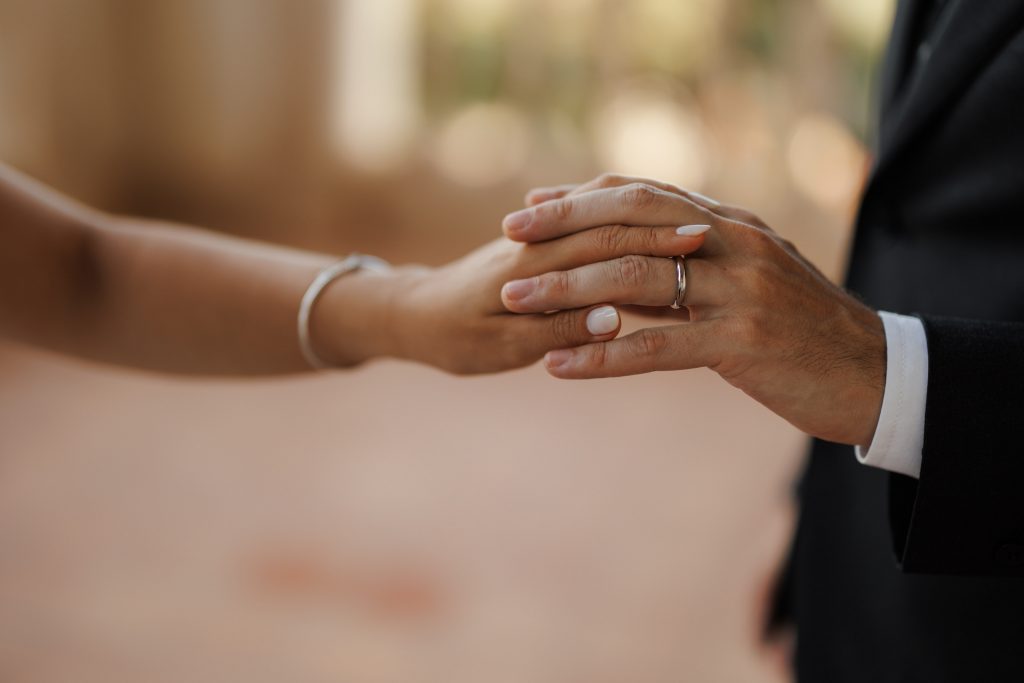 Nacho & Bea · Mallorca · see the full wedding →
A practical shortlist: Salamanca-area venues & spaces to explore
Here’s a quick list of four hotels to start your venue research; we looked them up in November 2026 (the Parador and NH sites block automated visits, so confirm details with them directly), and nobody paid to be listed. Always confirm current wedding options, capacities, and event rules directly with each property.
- Hospes Palacio de San Esteban – a former Dominican convent beside the San Esteban monastery, with an events page of its own
- Parador de Salamanca – ideal for destination guests and skyline views
- NH Collection Salamanca Palacio de Castellanos – central, polished, and practical for city weddings
- Eurostars Las Claras – modern comfort with easy logistics for groups
Shortlist venues based on light + flow + backup plan—those three decide how relaxed your day feels.
Protocol in Salamanca: how to plan without feeling stiff
“Protocol” sounds intimidating, but in practice it’s just the rhythm of the day—who arrives when, how the ceremony space is used, and what’s considered respectful in historic or religious settings. For destination couples, the goal is to understand the basics so you can relax.
Ceremony types you’ll typically see
- Civil ceremonies: often more flexible with timing and structure, depending on the venue and local arrangements.
- Religious ceremonies: can have stricter rules about photography positions, movement, and timing.
- Symbolic ceremonies: popular for destination weddings; you can design the flow around light and guest experience.
Ask early about photo rules (movement, flash, where we can stand) so there are no surprises during the ceremony.
On the legal side, a civil wedding in Spain needs one partner to be resident in Spain or Spanish, so most visiting couples marry at home and hold a symbolic ceremony in Salamanca. A Catholic ceremony has its own parish paperwork. Ask the parish or your embassy what applies to you; we plan the day around whichever ceremony you choose.
A simple “protocol checklist” to ask your venue/officiant
- What time can vendors access the space for setup?
- Are there restrictions on music, confetti/rice/petals, or candles?
- Are there any photography limitations during the ceremony?
- Where do guests wait before the ceremony starts?
- What’s the indoor backup plan, and does it feel as beautiful as Plan A?
- Is there a hard end time for music or the event?
The best weddings feel easy because the “rules” were clarified quietly in advance.
Sample timelines that work in Salamanca (built around light)
As photographers, we care less about copying a standard timeline and more about building one that fits your season, your venue, and how you want the day to feel. Here are three Salamanca-friendly examples you can adapt.
Option A: Elegant city wedding with golden-hour portraits
- Getting ready (same hotel): details + candid moments
- First look in a quiet courtyard or side street
- Ceremony mid/late afternoon
- Cocktails while we take 15–20 minutes for portraits
- Golden hour quick walk to a nearby plaza/river viewpoint
- Dinner then speeches
- Blue hour 5–10 minutes in Plaza Mayor (optional, highly recommended)
- Party
You don’t need a long portrait session—two short blocks (after ceremony + golden hour) are usually perfect.
Timing check: in June, with sunset around 21:55, a 19:30 ceremony still leaves real golden hour for portraits at about 21:00 to 21:45, and dinner starts late as it does across Spain. In December a 15:30 ceremony is the latest that leaves daylight for the bridge or the plaza before sunset around 18:00.
Option B: Micro wedding (10–30 guests) with a relaxed pace
- Slow morning + getting ready
- Short walk to ceremony location
- Ceremony
- Group photos (quick, organized, 10 minutes)
- Long cocktails / tapas-style celebration
- Sunset portraits while guests enjoy another round
- Intimate dinner
Micro weddings shine when you protect time to actually be together, not just move between locations.
Option C: Two-person elopement with iconic Salamanca night photos
- Late afternoon meet-up + a calm walk through the old town
- Private vows in a quiet spot (simple, meaningful, no audience)
- Golden-hour portraits near the river/bridge
- Blue hour in the historic center
- Night photos in Plaza Mayor
- Celebration dinner
Salamanca is one of those cities where night portraits can be just as striking as daytime.
 Andreas & Nina · Málaga · see the full wedding →
Logistics that make a Salamanca wedding feel easy (for you and your guests)
Salamanca is compact, which helps, but it is also a city of cobbles, slopes and pedestrian lanes where cars cannot always reach the door. Two decisions make the biggest difference: where everyone sleeps and how people get to a countryside venue.
Where to stay (guest experience first)
- Stay central if you want a walkable weekend: welcome drinks, sightseeing, and the wedding day all flow naturally.
- Choose one “main hotel” even if guests book elsewhere—this becomes the meeting point for transport and plans.
- Think about stairs/cobblestones for older relatives: short transfers can be kinder than long walks.
One central base, even an informal one, removes most of the small questions guests would otherwise send you on the day.
Getting around (without over-planning)
- For city weddings: plan walking routes and keep portrait locations close.
- For countryside venues: arrange one simple shuttle plan rather than multiple pickup points.
- Build in buffer time—historic centers always have small delays (parking, crowds, a quick hello from a neighbor).
The best timelines include breathing room—your photos look calmer when you feel calmer.
How we photograph weddings in Salamanca (documentary + editorial, without the awkward posing)
Salamanca is naturally photogenic, so the goal isn’t to “manufacture” moments—it’s to give you space to feel the day, while still making sure you look incredible in the light the city offers.
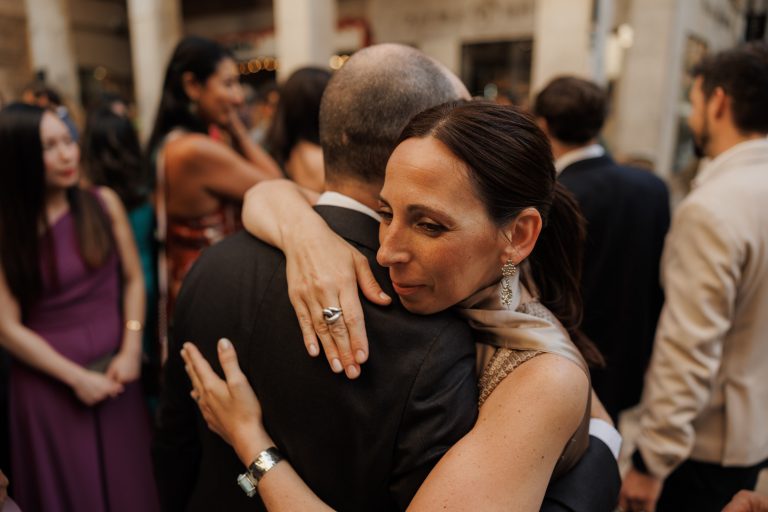
- Documentary coverage: real interactions, hugs, laughter, the in-between moments in the streets.
- Editorial guidance: simple direction for hands, posture, and where to stand so the architecture frames you.
- Calm for camera-shy couples: you won’t be asked to perform; we’ll keep it natural and quick.
- Light-first planning: we help shape a timeline that protects golden hour and avoids harsh midday sun when possible.
Our prices for a Salamanca wedding
Photography and film packages from €1,390 apply in Salamanca exactly as elsewhere in Spain, and there are no extra travel fees. A five-hour package fits an elopement or a ceremony plus portraits plus dinner; a full day with no time limit suits a wedding that runs from getting ready to the first dance. Details are on our investment page.
| Coverage | Photography | Film | Photo + film |
|---|---|---|---|
| 5 hours | €1,390 | €1,390 | €2,780 |
| 6 hours | €1,590 | €1,590 | €3,180 |
| 7 hours | €1,790 | €1,790 | €3,580 |
| 8 hours | €1,990 | €1,990 | €3,980 |
| Full day, no time limit | €2,190 | €2,190 | €4,380 |
Add-ons: an extra hour is €200, a second photographer is +€890, a second filmmaker is +€990 and a pre-wedding day is +€890. A 20% deposit locks the date. Use the calculator on our investment page to price your own combination.
You can book any package and change it later, a named backup from our team is written into every contract, we work in any weather, and if your date moves the deposit moves with it. We reply to every enquiry within 24 hours.
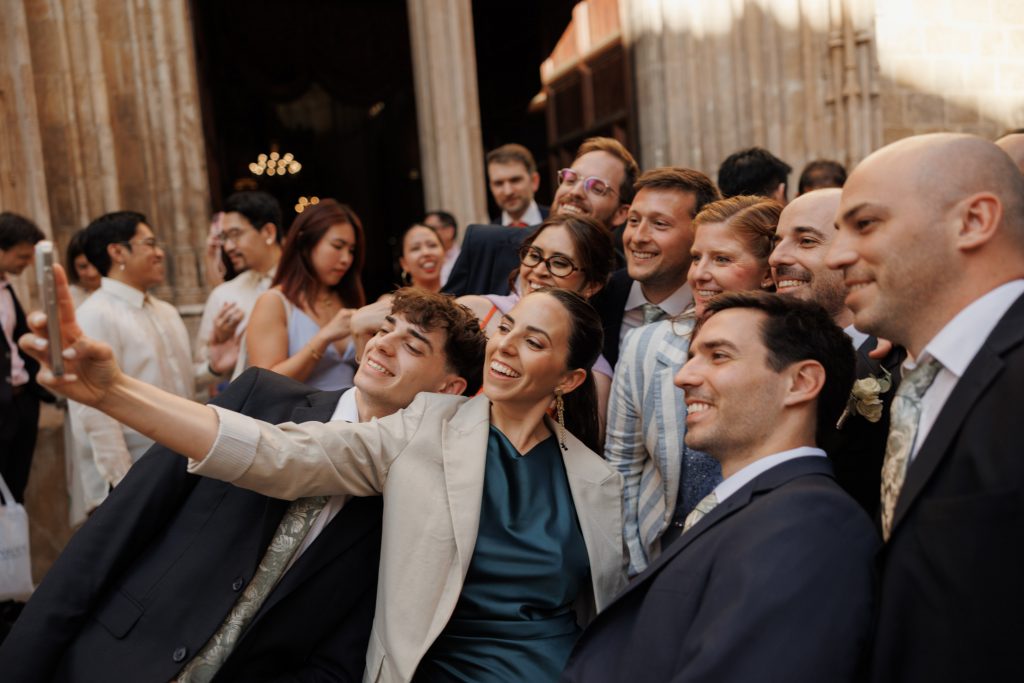 Nacho & Bea · Mallorca · see the full wedding →
How we cover a wedding day in Salamanca
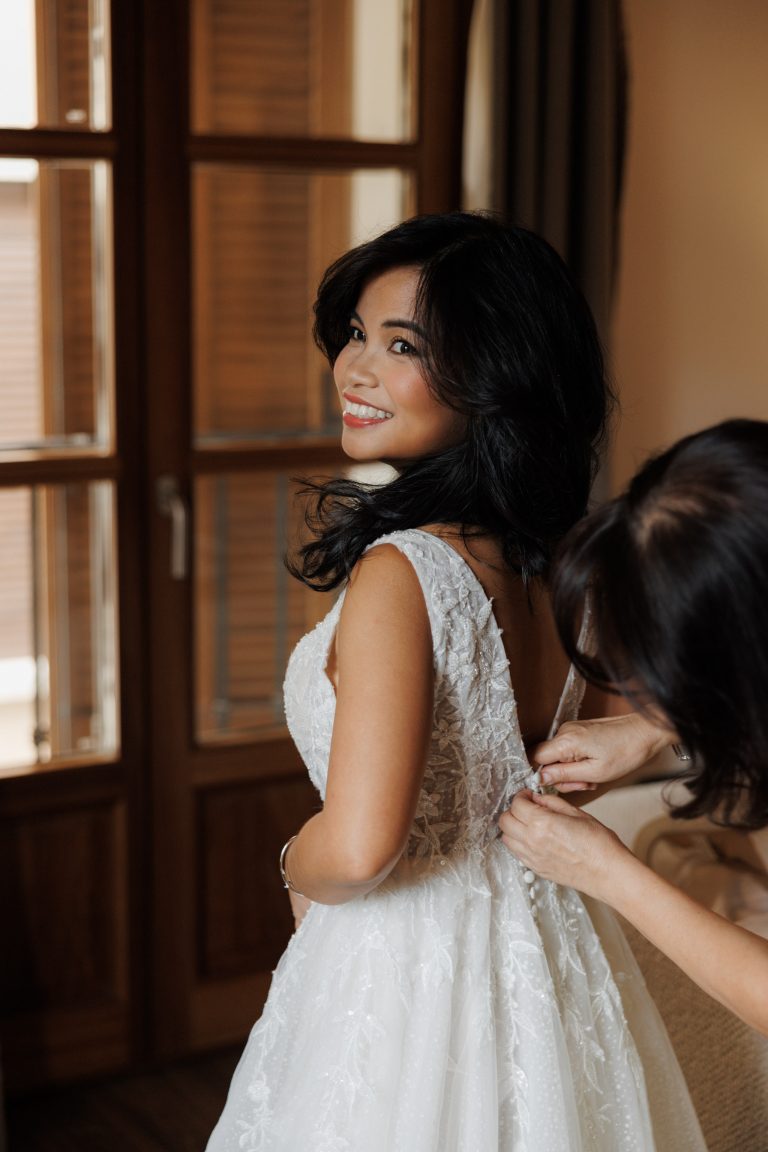
A typical city day starts with getting ready in the hotel suite, where the window light is best before noon. We then walk with you to the ceremony, keeping portrait stops inside five or ten minutes of the venue so guests never wait long. Portraits are split into two short blocks, one after the ceremony in shade under the arches and one in the last hour of sun on the river side or in the old town lanes. For a countryside finca we arrive earlier and stay through the evening, because the best light there arrives after the cocktail hour.
If you are comparing options, see our Spain photography page and the Spain film page, and look at the photo work, film work and couple stories. For planning help in the region there is our guide to wedding planners in Castilla y León and the one for Madrid and Castile. The wider picture is in the Spain wedding guide, and you can read who we are before you write. Send your date and guest count through the contact page and we will check availability.
FAQ: wedding photographer in Salamanca
Is Salamanca good for an elopement or micro wedding?
Yes. The old town fits a two-person elopement or thirty guests, because ceremony, portraits and dinner can all be reached on foot. A five-hour package covers a ceremony at a quiet corner, golden-hour portraits near the river and a short night walk through Plaza Mayor before dinner.
What time of day is best for wedding photos in Salamanca?
The last hour before sunset, when the sandstone turns gold: from about 21:00 in late June and from about 17:00 in December. Plaza Mayor works best early in the morning or at blue hour, when it is quiet and lit. At midday we stay in shaded arches and doorways.
Will Plaza Mayor be crowded in our photos?
At midday and on summer evenings, yes. We use it for a short planned session, ten minutes at most, at dawn or after dinner, and mix it with the quieter university lanes and the river bank so the gallery never depends on one crowded square.
Do we need a planner for a Salamanca wedding?
For a large guest list, a countryside finca or a wedding coordinated from abroad, a planner saves a lot of email. For an elopement or a small city wedding, a hotel coordinator and a clear timeline from us are often enough. We can talk through your plans before you decide.
Can we marry legally in Salamanca as foreigners?
A civil wedding in Spain requires one partner to be Spanish or resident in Spain, so most visitors marry at home and hold a symbolic ceremony here. A Catholic ceremony follows parish rules. Check with the registry or your embassy; we photograph whichever ceremony you choose.