Segovia and Ávila are two walled cities about an hour apart, one dominated by an aqueduct and a castle on a rock, the other by a medieval wall you can see from a road.
In short: we photograph and film weddings and elopements in Segovia and Ávila, with photography and film packages from €1,390 and no extra travel fees. Plan the Alcázar and walls for the last hour of light, with sunset around 21:50 in late June and around 17:50 in December, keep the aqueduct to a short early stop because it is busy, and choose one city as the base on the wedding day. Both sit at about 1,000 metres or more, so wind and cool evenings are part of the plan.
We are a team of six documentary wedding photographers and filmmakers, and in Segovia and Ávila we plan around walls, viewpoints and the cold evening air of the plateau. Our style is documentary with an editorial eye—natural moments, great light, and calm direction when you need it (especially if you’re camera-shy).
This page is also for couples checking availability: we’ll share how we typically hold dates, what information helps us confirm quickly, and how to build a plan that actually works in these historic cities.
Why Segovia & Ávila are incredible for weddings (and who they’re best for)
These two cities are close enough to combine, but different enough to feel like two chapters of the same story.
- Segovia is all drama and views: the Alcázar silhouette, the Roman aqueduct, and golden rooftops from the miradores. It’s ideal if you want iconic backdrops and a lively, walkable old town.
- Ávila is quieter and more intimate: the medieval walls wrap the city like a crown. It’s perfect for couples who want a slower pace, a more private feel, and portraits that look classic rather than trendy.
Best fit: elopements, micro weddings, and elegant destination weddings where you care about atmosphere, architecture, and a day that flows without rushing.
Segovia and Ávila reward couples who plan around light + walking pace—not around squeezing in every landmark.
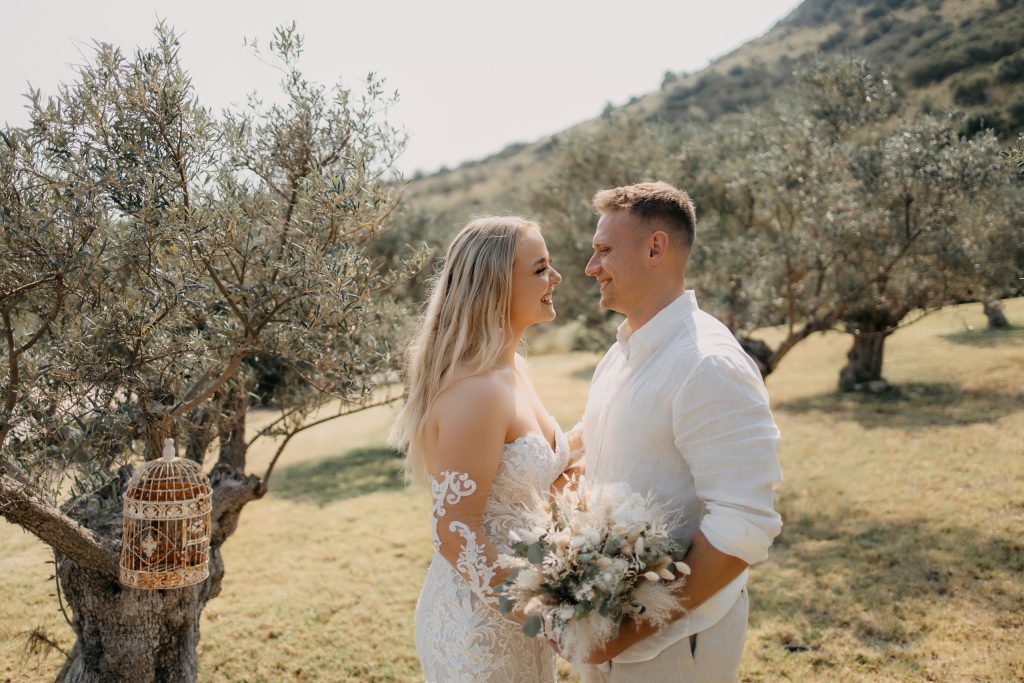 Andy & Leesha · Mallorca · see the full wedding →
What wedding photos look like here: light, stone, and the “old city” rhythm
The light you’ll love (and the light to plan around)
Both cities photograph beautifully because the stone reflects light softly—especially in late afternoon. But the old towns have narrow streets and sudden shade, so timing matters more than you’d expect.
- Morning: calm streets, cleaner backgrounds, softer energy. Great for elopements and pre-ceremony portraits.
- Midday: can be harsh in open plazas and viewpoints. We can still make it work by using shade, doorways, and tighter compositions.
- Golden hour: the charm window—warm stone, long shadows, and the best skyline views.
- Blue hour/night: romantic city glow; perfect for a short “last 10 minutes” session after dinner.
Build your timeline so your key portraits happen late afternoon to sunset—and keep the middle of the day for lunch, rest, and guest time.
Crowds and how to keep your photos feeling private
Segovia’s aqueduct area and the most famous viewpoints can get busy, especially on weekends and in peak travel months. Ávila is generally calmer, but the wall walk and main gates can still draw visitors.
- Choose one iconic spot and pair it with two quieter corners.
- Plan a short sunrise or early-morning session if privacy is a priority.
- Use walking routes instead of “stop-and-pose” lists—your gallery will feel more documentary and less staged.
Altitude explains the weather. Segovia stands at about 1,000 metres and Ávila, the highest provincial capital in Spain at about 1,130 metres, is colder still, with frost possible from November to March and fresh evenings even in July. A June ceremony at 19:30 is in good light; a December one needs to be over by 15:30 if you want daylight portraits.
Privacy usually comes from timing + route, not from finding a “secret” location.
Best seasons for a Segovia or Ávila wedding (realistic weather notes)
Castile and León has a continental feel: hot summers, colder winters, and big temperature swings between day and night. Weather can change quickly, especially with wind on viewpoints and along the walls.
Spring (March–May)
- Pros: fresh light, comfortable walking temps, greener countryside.
- Watch for: wind and occasional rain; evenings can be chilly.
- Photo tip: plan a warm layer that looks good on camera (a tailored coat, cape, or shawl).
Summer (June–August)
- Pros: long days, late sunsets, lively atmosphere.
- Watch for: heat at midday and strong sun in open areas.
- Photo tip: consider a later ceremony and a slower afternoon schedule.
Autumn (September–November)
- Pros: softer light, comfortable temps, a more relaxed travel season.
- Watch for: earlier sunsets as the season progresses.
- Photo tip: move key moments earlier so you’re not racing the light.
Winter (December–February)
- Pros: moody skies, cozy indoor celebrations, fewer tourists.
- Watch for: cold, possible frost, and very early sunset.
- Photo tip: prioritize indoor spaces with window light and plan a quick outdoor portrait window.
In this region, the best wedding days are the ones that respect the season—siesta-style pacing in summer, cozy indoor rhythm in winter.
Segovia wedding photo locations: walls, viewpoints & iconic backdrops
Segovia gives you variety within a small radius: grand landmarks, quiet alleys, and wide open views. Here are the spots that consistently work well for portraits and storytelling.
Alcázar viewpoints (the “storybook castle” angle)
The Alcázar is the headline for a reason. The best photos usually come from viewpoints where you see the full silhouette—especially near sunset when the stone warms up.
- Best for: couple portraits with a cinematic feel.
- Timing: late afternoon to sunset for the most flattering light.
- Logistics: expect walking and occasional wind; comfortable shoes matter.
Give the Alcázar view time—rushing it is the fastest way to feel stressed.
The full silhouette of the Alcázar is best seen from the Eresma valley side, around the Pradera de San Marcos and the path above it, where the castle sits above the trees. The interior is a ticketed monument, so ask the Alcázar office whether a ceremony or portraits inside are possible rather than assuming. From the Pradera the walk back to the old town is uphill, so allow time and a second pair of shoes.
The Roman Aqueduct area (iconic, energetic, and busy)
This is the classic “we’re in Segovia” moment. It can be crowded, but we can still create clean frames by choosing the right side streets and timing.
- Best for: a short, high-impact set of photos.
- Timing: early morning for fewer people; evening for atmosphere.
- Tip: plan it as a 10–15 minute stop, not a full portrait session.
Treat the aqueduct like a “signature shot,” not the whole story.
Old town lanes + plazas (the documentary gold)
Our favorite Segovia galleries usually include the in-between moments: walking, laughing, stopping for a drink, greeting guests in a small plaza. This is where camera-shy couples relax.
- Best for: candid storytelling and natural movement.
- Timing: anytime—these streets give shade and texture.
- Tip: plan a route from getting-ready to ceremony to dinner so photos happen naturally.
The most “you” photos often happen between the landmarks.
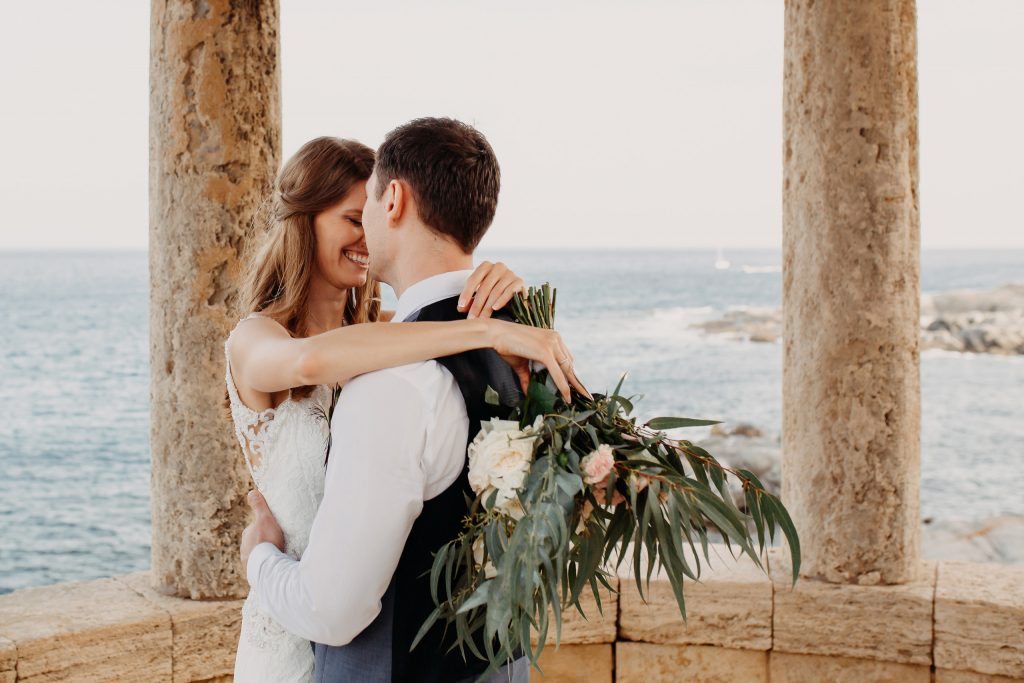 Slava & Anastasia · Costa Brava · see the full wedding →
Ávila wedding photo locations: the walls, gates & quiet corners
Ávila suits couples who want a calmer, more intimate feel—especially for elopements and micro weddings.
The medieval walls (walkable, dramatic, and classic)
The walls are the visual anchor of Ávila. They photograph beautifully from outside the city and from certain elevated points, and they set a strong tone for an editorial-meets-documentary gallery.
- Best for: elegant portraits with strong lines and texture.
- Timing: late afternoon for warm stone; blue hour for a moodier look.
- Watch for: wind and cooler temperatures near sunset.
Plan your Ávila portraits around the walls the same way you’d plan a beach wedding around the tide—timing changes everything.
Historic gates and quieter streets
Ávila’s gates and side streets are ideal for a relaxed walk-and-talk session. It’s also easier here to create images that feel private even with a few tourists around.
- Best for: couples who want calm, not spectacle.
- Tip: schedule 30–45 minutes for a gentle walk rather than a “pose list.”
Ávila shines when you slow down—your photos will, too.
Los Cuatro Postes and the wall walk
Los Cuatro Postes, a viewpoint across the Adaja river on the road out of town, gives the classic frame of Ávila’s whole wall, with warm light on the stone in the evening. Plan it as a short stop with a driver rather than a walk. The wall itself has a ticketed walkable section, and its opening hours and any photography conditions are set by the city, so confirm them for your date. The Cathedral is built into the wall, which makes a handsome, compact pair of backdrops in the old town.
Where to celebrate: venue styles that work well around Segovia & Ávila
Instead of a giant list of random places, here are venue types that tend to work best for destination couples in this area—especially if you care about flow, light, and guest comfort.
1) Historic hotels and paradores (easy logistics, strong atmosphere)
For many destination weddings, staying and celebrating in one place is the simplest way to keep everyone relaxed—especially if guests are flying into Madrid and navigating Spain for the first time.
- Why it works: on-site rooms, built-in rain plan, and fewer transfers.
- Photo advantage: window light, elegant interiors, and cohesive design.
2) Countryside fincas and estates (space, privacy, and long dinners)
If you want a weekend feel—welcome drinks, a long reception, and a brunch the next day—an estate outside the city can be ideal.
- Why it works: privacy, outdoor ceremony options, and room for a plan B.
- Photo advantage: golden-hour fields and calmer backgrounds than city centers.
Choose an estate with a genuinely beautiful indoor option—not a “backup tent in a parking lot.”
3) City-center restaurants (micro wedding perfection)
For 10–30 guests, a beautiful restaurant meal can feel more special than a traditional reception—especially in a place like Segovia where food is part of the culture.
- Why it works: simple planning, strong guest experience, and no production pressure.
- Photo advantage: candlelight, toasts, and real emotion without a rigid schedule.
Micro weddings photograph best when the meal is unhurried and the table setup is intentional (linens, candles, and warm light).
Venues we would check first
Two state-run hotels suit the setting. Parador de Segovia sits on a hill facing the old town, which gives a skyline view without leaving the hotel, and Parador de Ávila is in a palace beside the walls. Confirm wedding use, capacity and photography rules with each directly. Near Segovia, the gardens of the Royal Palace of La Granja de San Ildefonso, about 11 kilometres away, are popular for portraits but are managed by a national heritage body, so permission for a wedding shoot has to be asked in advance.
Sample timelines that actually work here (with light in mind)
Below are three timeline templates we often recommend in historic cities like Segovia and Ávila. They’re designed to feel relaxed, keep guests comfortable, and protect the best light for your portraits.
Option A: Segovia micro wedding (20–50 guests) with sunset portraits
- 13:00 Getting ready (separate rooms if possible, near old town)
- 14:30 First look + short walk in quieter streets
- 16:00 Ceremony
- 16:30 Congratulations + group photos (keep it tight and shaded)
- 17:15 Cocktail hour
- 19:30 Sunset couple portraits at an Alcázar viewpoint (20–30 minutes)
- 20:15 Dinner + toasts
- 22:30 5-minute night photos near the city glow
Protect a small sunset window for just the two of you—it’s the easiest way to get “wow” images without sacrificing guest time.
Season shift: this plan suits late September or early October, when sunset falls around 19:50 to 20:10. In June, sunset is around 21:50, so move the golden-hour portraits to about 21:00 and dinner to 21:45; in December keep the ceremony at 15:30 or earlier.
Option B: Ávila elopement (just you two or a few guests)
- 09:00 Slow morning + getting ready
- 10:30 Ceremony (quiet spot near the walls / old town)
- 11:00 Walk-and-talk portraits through gates and side streets
- 12:30 Long lunch
- 17:30 Golden-hour portraits with the walls (best light)
- 19:30 Dinner
Split portraits into two short sessions—morning calm + evening glow—so the day feels like a celebration, not a marathon.
The 17:30 golden hour is for November to January, when the sun sets at about 17:50 to 18:15. In June the same walls glow from about 21:00, so the long lunch can be longer.
Option C: Two-city weekend (Segovia + Ávila) for a destination wedding
- Day 1 (arrival) Welcome drinks in Segovia old town
- Day 2 (wedding) Ceremony + reception in one city (choose one as the “base”)
- Day 3 Brunch + short portrait session in the other city (a relaxed adventure)
Don’t make guests move cities on the wedding day—use the second city as a pre- or post-wedding experience.
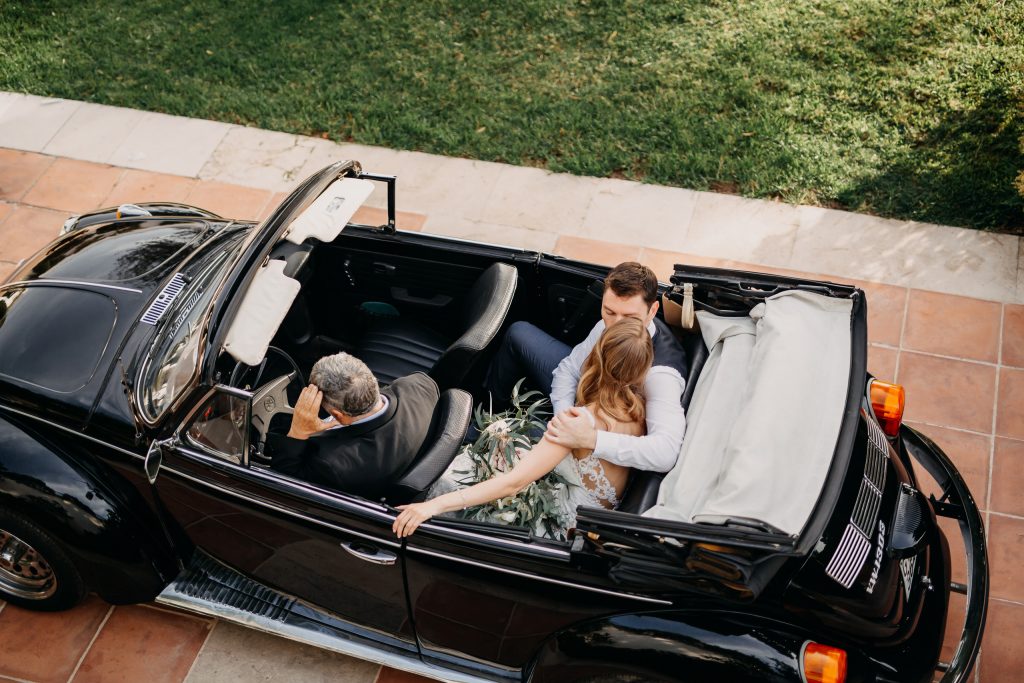 Slava & Anastasia · Costa Brava · see the full wedding →
Travel & logistics: how to keep the day smooth (especially for international guests)
Getting here
Most destination couples and guests route through Madrid. From there, Segovia and Ávila are typically straightforward to reach by car or train/bus depending on your plan. The key is designing a schedule that doesn’t require everyone to be a logistics expert.
- Best guest experience: one main base hotel + clear group transport for key moments.
- Best couple experience: build in buffer time for hair/makeup, walking, and a quiet moment together.
Old-town access, walking, and shoes
Historic centers are beautiful because they’re old—meaning cobblestones, steps, and occasional vehicle restrictions. Even if you’re doing a “city wedding,” it helps to think like you’re planning a small adventure.
- Choose shoes you can walk in (and bring a second pair for portraits).
- Plan for 10–15 minutes more walking time than Google Maps suggests.
- Consider a central getting-ready location to reduce transfers.
On the legal side, a civil wedding in Spain needs one partner to be Spanish or resident in Spain, so most visiting couples marry at home and hold a symbolic ceremony here. Our guide to getting married in Spain as a foreigner explains the options. From Madrid, Segovia is about 30 minutes by high-speed train to a station a few kilometres outside the old town, and Ávila is a little over an hour by road and about an hour and a half by train; check timetables for your date and plan a shuttle for guests.
Comfort is not the enemy of luxury—comfort is what lets you be present.
How we photograph weddings in Segovia & Ávila (and how we keep it relaxed)
In cities like these, the goal isn’t to “collect” backgrounds. It’s to tell the story of how it felt: the quiet nerves, the way you held hands walking through the old town, the cheers at cocktail hour, the sunset air on the viewpoint.
- Documentary first: we focus on real moments as they happen—no constant interruption.
- Light direction, not heavy posing: simple prompts, natural movement, and flattering angles.
- Timeline help: we’ll help you place portraits, ceremony, and key moments where the light is kind.
- Logistics support: walking routes, buffer time, and a plan for wind/heat/rain.
If you’re camera-shy, you’re not alone. Most couples are. Our job is to make the photo part feel like the easiest part of the day.
The best photos come from a day that feels unrushed—so we build a plan that gives you breathing room.
Our prices for a Segovia or Ávila wedding
Photography and film packages from €1,390, with no extra travel fees, apply in both cities. An elopement walk through the old town fits five hours; a micro wedding with a late lunch is usually six or seven hours; a weekend with a welcome evening and brunch in the second city works as a full day plus a pre-wedding day. See the investment page.
| Coverage | Photography | Film | Photo + film |
|---|---|---|---|
| 5 hours | €1,390 | €1,390 | €2,780 |
| 6 hours | €1,590 | €1,590 | €3,180 |
| 7 hours | €1,790 | €1,790 | €3,580 |
| 8 hours | €1,990 | €1,990 | €3,980 |
| Full day, no time limit | €2,190 | €2,190 | €4,380 |
Add-ons: an extra hour is €200, a second photographer is +€890, a second filmmaker is +€990 and a pre-wedding day is +€890. A 20% deposit locks the date. Use the calculator on our investment page to price your own combination.
You can book any package and change it later, if the date moves the deposit moves with it, we work in any weather and the contract names a backup from our team. We reply within 24 hours.
 Tom & Connie · Costa Brava · see the full wedding →
Availability: how to check your date (and what we need from you)
If you’re reaching out about availability for Segovia or Ávila, a little context helps us give you a clear answer quickly—especially for popular weekends and travel-heavy dates.
- Date (or a short list of possible dates)
- Location: Segovia, Ávila, or both (and your venue/hotel if you have it)
- Guest count (even a rough estimate)
- Type of day: elopement, micro wedding, full wedding, weekend celebration
- Priorities: views, privacy, food, party, documentary coverage, editorial portraits
Even if you’re early in planning, that’s okay. We can help you sanity-check the timeline and suggest a structure that fits the light and the city rhythm.
you don’t need every detail to reach out—just your date window and the feeling you want.
Where to go next
Our Spain photography page and film page cover the whole country, with the Spain wedding guide as the overview. For castles, haciendas and permits see castle and hacienda weddings in Spain, and for the next cities in Castile Burgos and León. Browse our photography, film and couple stories, learn about us or send your date through the contact page.
FAQ: wedding photographer in Segovia and Ávila
Can we do portraits at the Alcázar or on the walls without a long photoshoot?
Yes. Choose one main viewpoint, one quiet walking route and a 20 to 30 minute window in the last hour of light. Entry to the Alcázar interior or the wall walk depends on tickets and opening hours, so confirm them first; outside viewpoints are free to use.
Can we combine Segovia and Ávila on the wedding day?
It is smoother to pick one city as the base for ceremony and reception, since the drive is about an hour. Use the other city for a welcome evening or a day-after session. Guests enjoy it more and your schedule keeps its buffers.
What time should a Segovia or Ávila ceremony be for the best light?
In late June, a ceremony around 19:30 leaves golden light until sunset near 21:50. In autumn, 16:00 works, and in winter finish by 15:30 because sunset is around 17:50. Orientation of the venue matters too, so tell us the place.
What if it is windy or cold?
Wind and cool evenings are normal at this altitude. Plan one sheltered portrait option such as a narrow street or courtyard, bring a tailored coat or shawl, and leave buffer time. We work in any weather and keep a named backup from the team in the contract.
Is it realistic to marry legally in Segovia as a foreigner?
A civil wedding in Spain needs one partner to be Spanish or resident in Spain, so most visitors marry at home and hold a symbolic ceremony in Segovia or Ávila. The registry or your embassy can say what applies to you, and we photograph the symbolic ceremony or the legal one alike.